Showing posts with label trip. Show all posts

Sunday, October 15, 2017

Atlanta Botanical Garden, Revisited

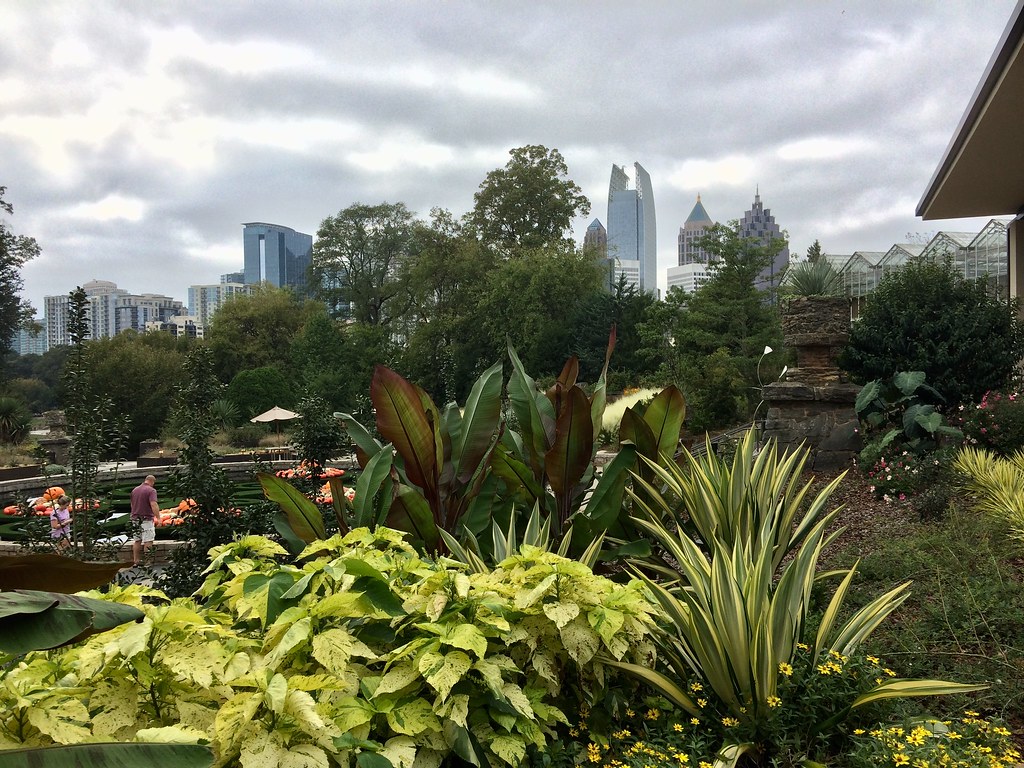
Why return to a garden that you've already visited?  There are so many reasons.  Gardens change with the seasons and over time.  Public gardens offer new features and programs to encourage folks to repeat their visits.  I had the opportunity to explore the Atlanta Botanical Gardens twice in 2013, and I wrote all about it at the time. While some things have remained the same, there have been some changes that I believe warrant a new blog post.

"Chalices" was one of the featured pieces for the
Curious Garden at Atlanta Botanical Garden
The exhibit of the season is artist Adam Schwerner's "The Curious Garden".  To me, the most eye-catching feature of the exhibit is called "The Spirited Bosk".  Hundreds of maple saplings were cut at the base of the trunk, all the foliage was removed, and the trees were painted bright shades colors and placed throughout the property.  In addition to the two areas with painted trees inside the property, a line of pink painted trees greets visitors from the entrance to the garden's parking area.


All-in-all, Schwerner created twelve art features that were scattered throughout the grounds, including green chains in the Fuqua Conservatory that were designed to mimic the aerial roots suspended from Cissus, purple totems along the flower walk, large red accents suspended above the Kendeda Canopy Walk designed to attract visitors' attention to the tree canopy overhead, and a mixture of glass and orchid chandeliers in the orchid center.


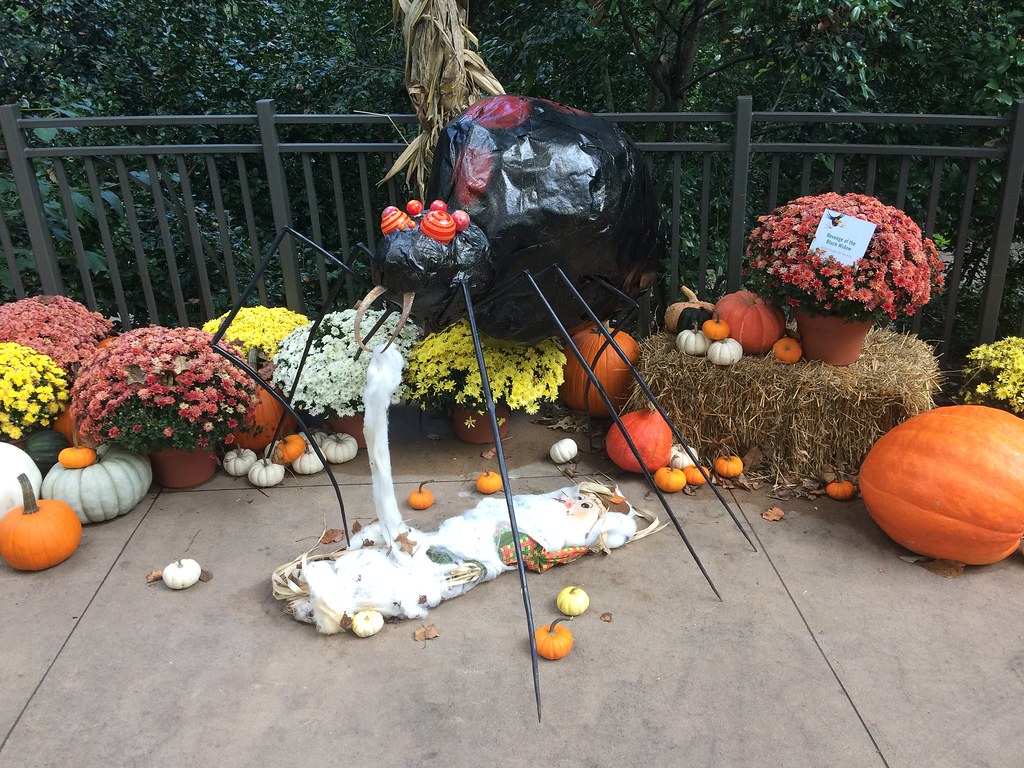
"Revenge of the Black Widow" is part of the
Scarecrows in the Garden autumn display

If incredible garden displays and art exhibits weren't enough to bring a visitor in for a repeat trip, the Atlanta Botanical Garden is also hosting their "Scarecrows in the Garden" fall feature.  Businesses, individuals, non-profit organizations, and clubs created more than 100 very creative scarecrows that have been placed throughout the gardens.  Scarecrow themes range the gamete from incredibly quite to pretty downright creepy.  Visitors of all ages really enjoyed the display, and I saw dozens of folks taking selfies with their favorite scarecrows.  If this idea sounds familiar to you, it's possible that your local public garden has a scarecrow fall feature as well.  The next season will bring "Garden Lights, Holiday Nights", which should be a lot of fun for visitors as well.

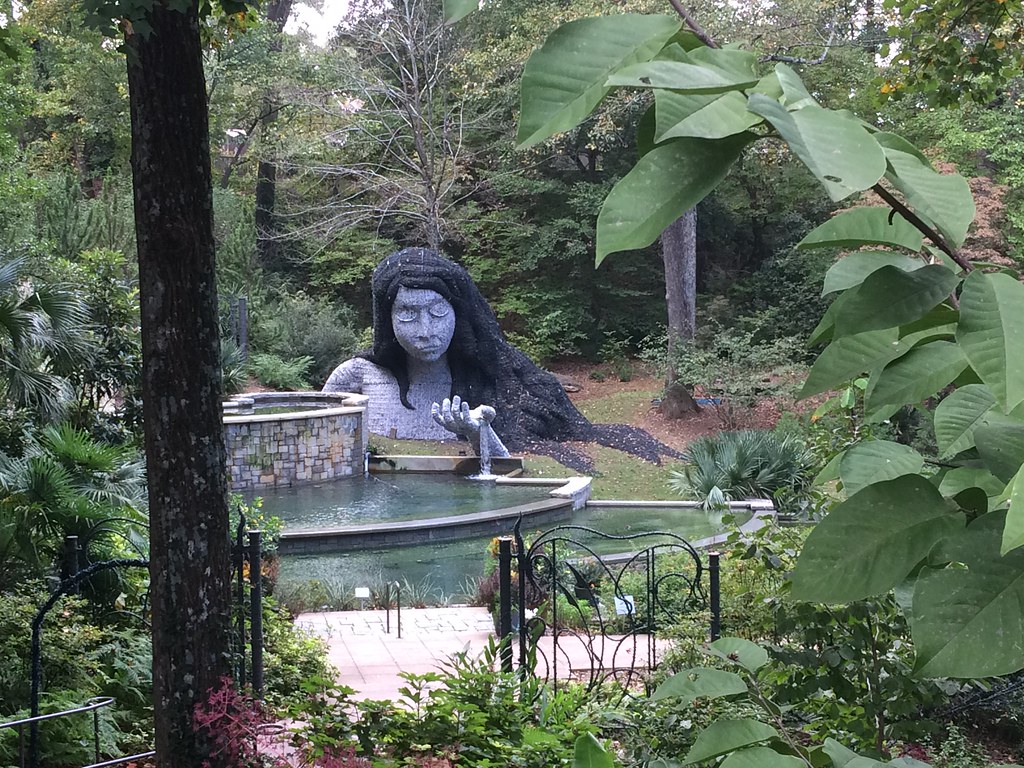
For those of you who read my previous post about the "Imaginary Worlds" exhibit, you will probably remember the really stunning Earth Goddess mosaiculture feature.  I had really been looking forward to returning to see the stunning goddess in all her verdant green, and I had been especially hoping to impress my travel companion with this really cool garden art.  My initial disappointment after discovering that the feature was in the midst of repairs was quickly replaced by excitement.  Right now is a great time to see the "bones" of a mosaiculture art piece.  The wire mesh was totally exposed and unplanted.  Very cool!

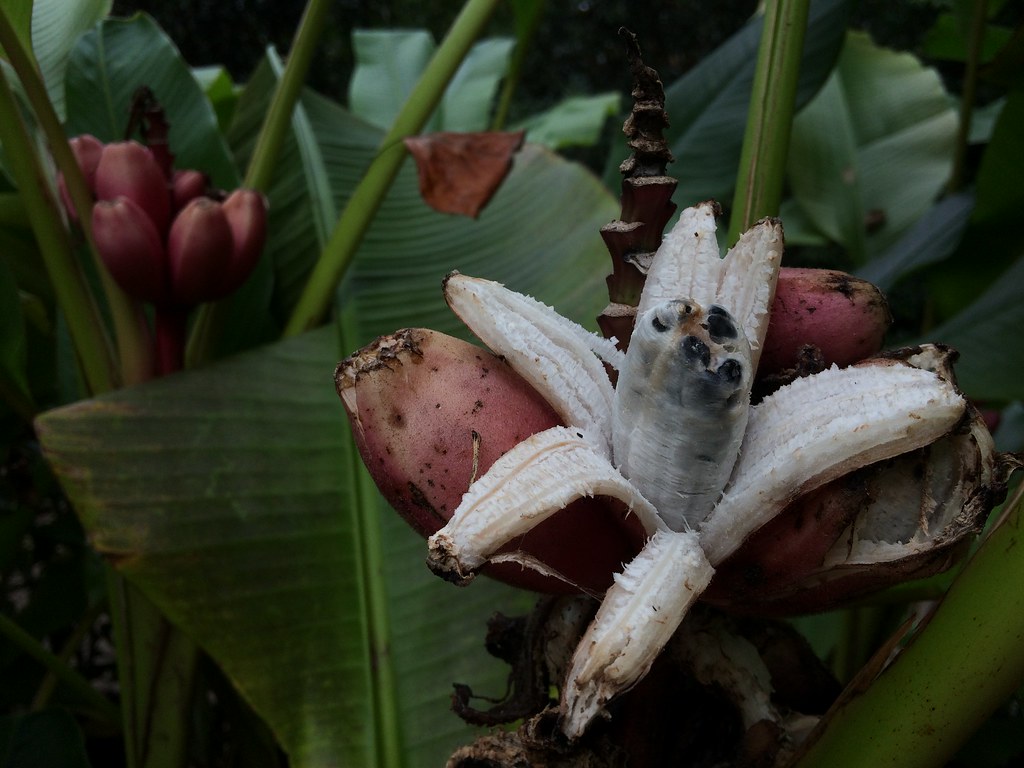
Musa velutina in fruit next to the Cascades Garden
In addition to the seasonal exhibits, visitors should keep their eyes peeled for the Chihuly glass pieces in the gardens and visitor center. Other features include a children's garden, edible garden, conservation native bog garden, Japanese garden, and all of the amazing plants growing across the property.  I was able to catch a cooking class in the edible garden's outdoor kitchen, and I think the experience was worth a standalone blog post.

If you work up an appetite during your trip, be sure to check out the new Longleaf Restaurant for a delicious meal.  If you prefer a quicker meal without the fuss of being served at a table, you can pick up a sandwich or snack at Longleaf's Quick Cafe or out in the garden at the Snack Bar.  The gift shop was also worth a visit, whether you're shopping or window shopping.

Other important considerations when planning your trip:
"Totems" is another feature of the Curious Garden
  • Hours of operation:
    • April - October, 9 a.m. to 7 p.m. Tuesday through Sunday
    • November - March, 9 a.m. to 5 p.m. Tuesday through Sunday
    • Closed Mondays, Thanksgiving, Christmas, and New Years day
  • *Admission:
    • Adults: $21.95
    • Youth (3-12): $15.95
    • Members and children under 3: Free
  • Parking:
    • 0 - 30 minutes: Free
    • 31 - 60 minutes: $2
    • Additional 30 minutes: $1
    • Daily Maximum: $15
  • Accessibility:
    • Virtually the entire garden is accessible.  I did not note any areas that could not be reached by one way or another.
    • Wheelchairs available at the Visitors Center on a first come first serve basis.
    • Electric mobility scooters may be rented.
  • Pets:
    • Restricted to service animals only.
    • Dogs are allowed for the annual "Reindog Parade" event.
  • Atlanta Botanic's guide to Garden Etiquette is available for review.
*Are you a member of your local public garden?  Ask if membership includes participation in the American Horticulture Society's Reciprocal Admissions Program.  By supporting your local garden, you and one guest could visit the Atlanta Botanical Garden for free.

To see more photos of any of my visits to the Atlanta Botanic Garden, check out my flickr stream.
If you have any questions, ideas, or suggestions, leave a comment or shoot me an email.

When is the last time that you visited a botanical garden exhibit?  What was your favorite feature?  

When is the last time that you visited the Atlanta Botanical Garden?  How was your experience?

The Skyline Garden at the Knoxville Botanical Garden
 
The usually verdant mosaiculture "Earth Goddess" is in the midst of repairs

Saturday, December 28, 2013

Baby it's Hot Outside, at the Fairchild Tropical Botanic Garden

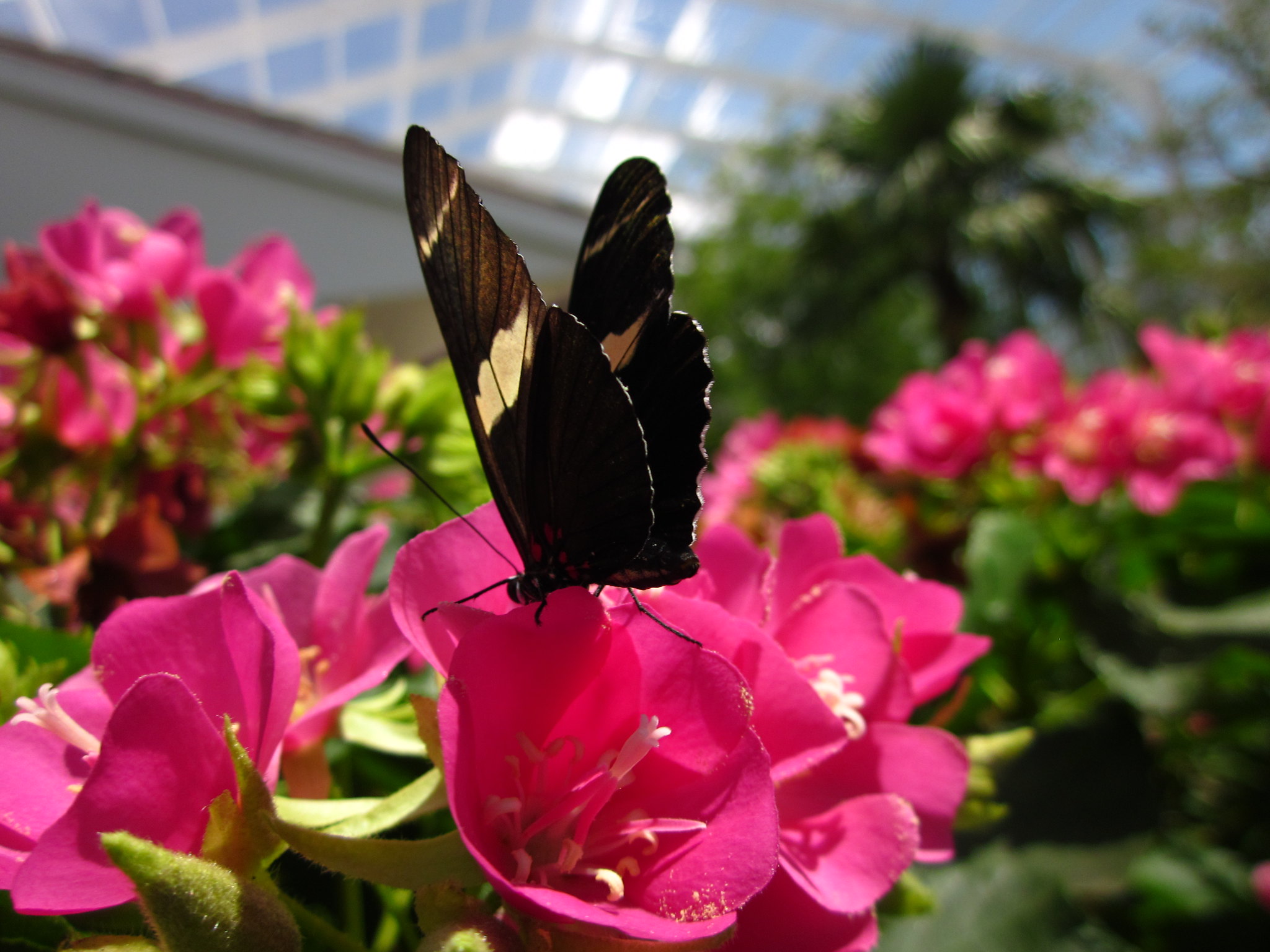
Wings of the Tropics exhibit at Fairchild
My grandparents are the sort of folks that are commonly called "snow birds."  They're retirees from up north who travel south to Florida when the weather gets chilly in the fall.  As I walked through Knoxville's January chill, I found myself thinking of my grandparents and all the other snow birds.  Although I enjoy winter and everything the winter landscape has to offer, there are times that I miss the heat of summer and the sight of vibrant, actively growing plants.

Last winter, I satisfied that desire by making a trek down to Miami to see the Fairchild Tropical Botanical Garden.  I got a special tour from my friend Nathan who had just finished an internship with the Fairchild.  Although the weather in Knoxville was frightful, Miami was muggy and in the high 70's, and everything was bursting with life.

During his internship, Nathan helped install the new "Wings of the Tropics" exhibit.  I'd been following the progress on Facebook, and I was really pleased to visit in person.  Visitors are able to closely observe thousands of tropical butterflies as they flutter about the 25,000 square foot pseudo-conservatory.  If you've ever visited an established conservatory, like the one at the U.S. Botanic Garden, Missouri Botanic, etc., then you can recall images of towering trees arching toward the ceiling.

Wings of the Tropics exhibit at Fairchild
One of my favorite parts about my visit to Fairchild was seeing a newly installed conservatory.  It was kind of like seeing a child whose parents had bought clothes that were a bit too big, knowing they would soon grow into them.  The trees were usually only about 15 feet tall.  The perennials and shrubs, correctly spaced, had bare earth between.  Swaths of annuals filled empty space, earmarked for future, more permanent plantings.  It was really something to behold.  It will be interesting to go back once things have filled in a bit more and matured.

The exhibit included a babbling brook, feeding stations, host plants to support the butterfly population, and a window into a laboratory where larvae and chrysalises are nurtured as replacements.  At a set time every day, visitors had the opportunity to release freshly emerging butterflies into the main house.  With wet crumpled appendages, the butterflies would crawl onto an extended finger, and wait until their bodies dried in the sunshine.  After a moment or two, they would unfurl their wings and fly off in search of nectar.

Nathan strikes a pose with some papayas
he'd planted during his internship
Another area Nathan worked in was the Edible Garden.  The garden included a variety of traditional and unusual fruits.  I learned that dragon fruit comes from an epiphytic cactus.  We checked on Nathan's "babies" -- the papayas he had planted two months earlier.  We tasted a selection of especially unfamiliar fruits, with the permission of garden staff of course.

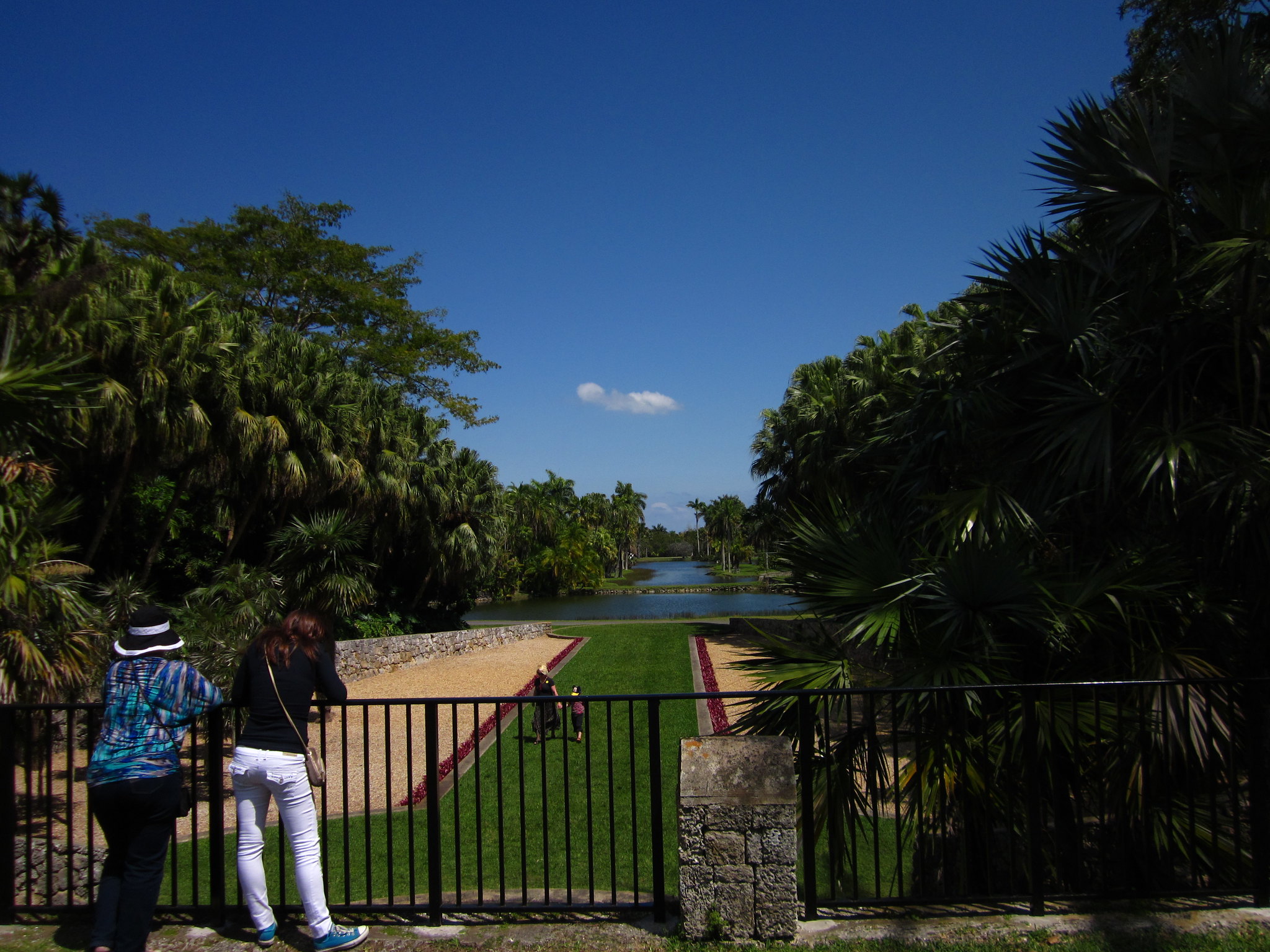
Some of my other favorite areas included the Palm and Cycad Collection that showcases more than 1500 palms, the Keys Coastal Habitat where we tromped through a couple of mangroves and listened for birds, and Richard H. Simons Rainforest.  Flower spikes of various orchids reached from tree branches, like a cat pawing for attention.  A creek cheerily sang through dappled shade.  Overhead, some kind of a hawk rested in the branch of a tree.

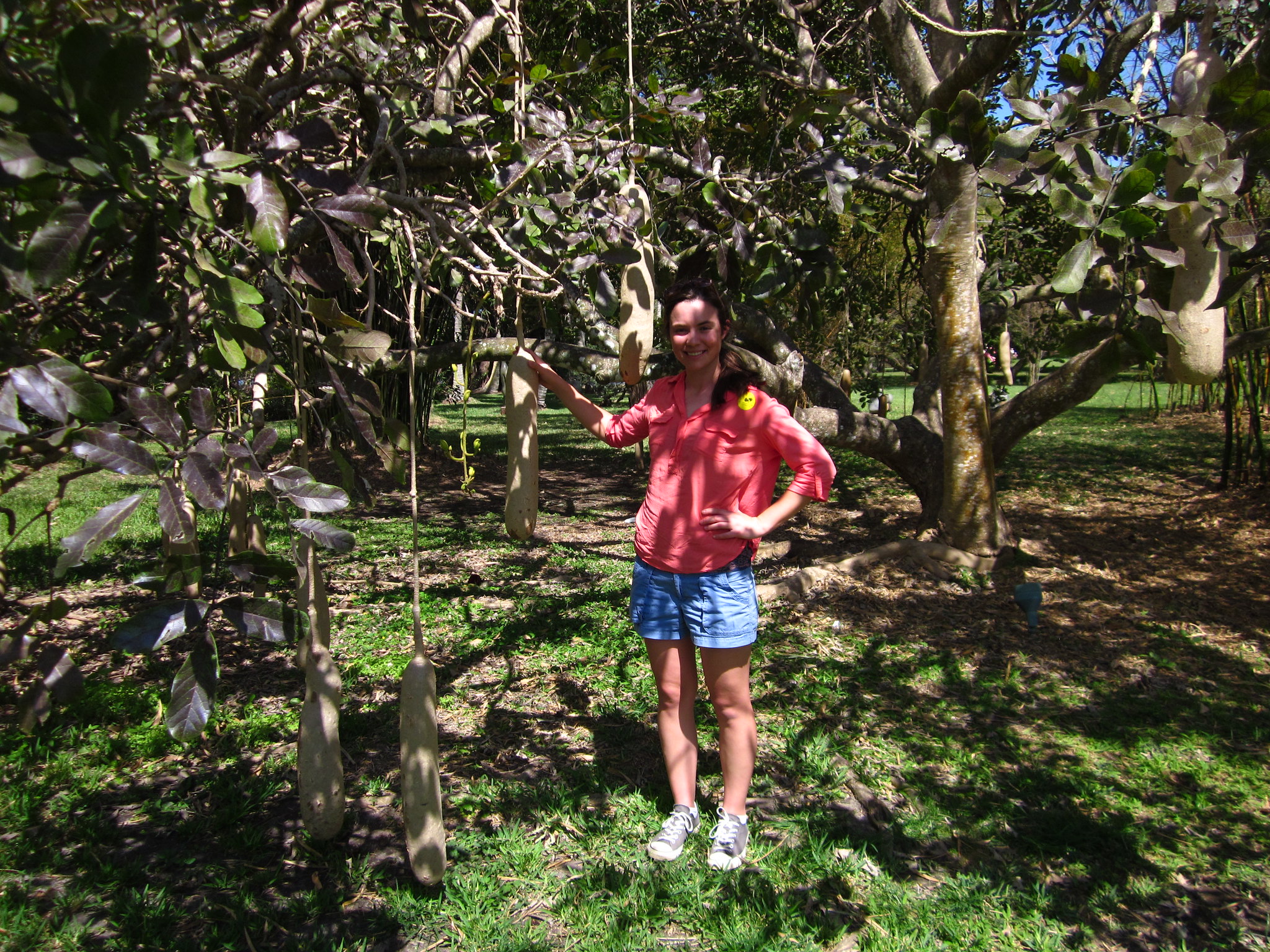
In addition to plant conservation and collection, the Fairchild also offers an artistic outlet.  There are a few Chihuly pieces on the property, within the Tropical Plant Conservatory and out on the grounds. The "Sitting Naturally" exhibit, profiled in the ever popular Garden Design magazine, was on display during our visit.  Down near the mangroves, past the "Sausage Tree", a marble carving class was in session.

Water fountains were interspersed around the property, and cold drinks were available at drink stands.  Peckish visitors were able to satisfy their hunger at the Glasshouse Cafe, Lakeside Cafe, or could grab some Starbucks coffee and a pastry at the Shops at Fairchild.  There were also several buildings equipped with clean restrooms.

All in all, it was a really fantastic visit.  The staff was friendly and knowledgeable, the grounds were vibrant and well tended, and I actually forgot that it was the middle of winter.  My main suggestion is that when you plan your trip, bring weather appropriate clothes, a hat, and comfortable walking shoes.  You'll have more fun if you're dressed comfortably.  Sunscreen and sunglasses may also come in handy.

Other important considerations when planning your visit:

  • Hours of operation: 7:30 a.m. to 4:30 p.m.
  • Admission:
    • Adults: $25
    • Seniors: $18
    • Youths age 6 to 17: $12
    • Children age 5 and under: Free
    • Fairchild Members: Free
  • Parking: Free
  • Accessibility:
    • Wheelchairs are available to use free of charge, and may be borrowed from any garden entrance point.
    • Shuttle service is available to various points of the garden.
    • Tram tours of the garden are available.
    • Trams are equipped with two hearing aids for hearing impaired visitors.
  • Pets:
    • Pets are not permitted on the property, with the exception of "Dog Day" and "Howl-O-Ween".
    • Service animals are permitted on the property.
Special thanks to my cohort Nathan for inspiring the visit with his Facebook updates, for giving me the ground tour and journeying to the end of I-95 with me.  Also thanks to my grandparents who put me up at their home in Florida.

To see more of my photos from our trip to the Fairchild Tropical Botanic Garden, be sure to check out my flickr set.

If you have any questions, ideas, or suggestions, please feel welcome to leave a comment on this post or shoot me an email.

Tell us about a visit to a tropical horticultural destination, real or planned.  Where would you go?  What would you do?

This Chihuly glass piece complements the colorful goldfish in the Tropical Plant Conservatory
The Palm and Cycad collection is home to more than 1500 palms and 350 cycad


For anyone wondering just what exactly a Sausage Tree looks like...

Sunday, May 19, 2013

Explore "Imaginary Worlds" at the Atlanta Botanical Garden

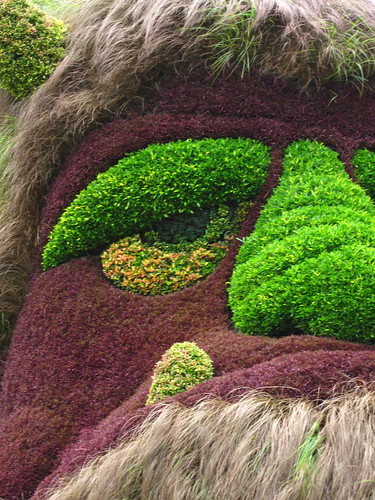
This surly ogre was a favorite in the
Atlanta Botanical Garden "Imaginary
Worlds" mosaiculture exhibit
I absolutely love exploring gardens.  Public gardens, botanical gardens, personal gardens, you name it.  What I love even more than visiting a garden one time, is when there's a reason to return.  It's for this reason that I have been so pleased with the Atlanta Botanical Garden this year.

In February, my cohort Morgan and I headed to Atlanta for the "annual" Southeastern Flower Show.  While planning our trip, we heard that a former classmate, Julie, had landed a job at the Atlanta Botanical Garden.  Julie's tour of the botanical garden turned into the highlight of our visit.  As we were leaving the garden, Julie encouraged us to return in May to check out their upcoming "Imaginary Worlds" mosaiculture sculpture exhibit.  We just got back this afternoon, and I can not wait to tell you all about this wonderful summer feature!

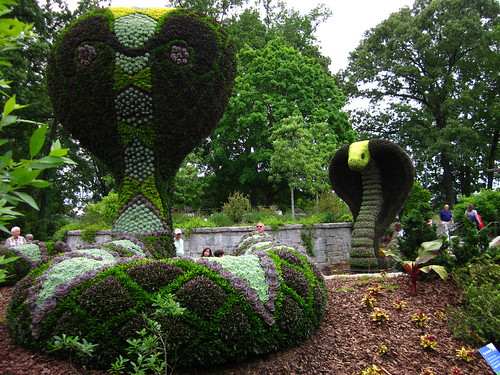
Mosaiculture involves using live plants to create patterns.  Imaginary Worlds takes this a step further by implementing mosaiculture on the face of larger than life statutes.  A steel skeleton provides shape and support for the statute.  The frame is covered with a planting medium, and herbaceous planted as plugs into the medium.  Some of the larger pieces, including (my favorite) "Earth Goddess", are actually supported with heavy duty beams and footers.

Water is crucial to the success of these living statutes.  Without the drip irrigation system that runs in the body of the statute near the plants' root zones, the plants would languish in Atlanta's summer heat.

Massive cobras needed extra support in the Atlanta
Botanical Garden "Imaginary Worlds" exhibit
The exhibit seemed to draw visitors of all ages, but the statutes seemed to be especially enchanting with the youngest visitors.  Little girls felt like princesses next to the grazing unicorn and boys leaped over garden beds to get a closer look at the grumpy ogre.  A visit to the Atlanta Botanical Gardens is a must for anyone driving through the city with youngsters this summer.

Of course, the Atlanta Botanical Gardens have more captivating features other than "Imaginary Worlds" that can be experienced throughout the year.  If it's been several years since your last visit, you'll want to experience the Kendeda Canopy Walk.  Since 2010, this is a very sturdy suspension bridge has allowed visitors to walk through the tree tops of Storza Woods.  It's fun to see the garden beds below from a birds eye view.

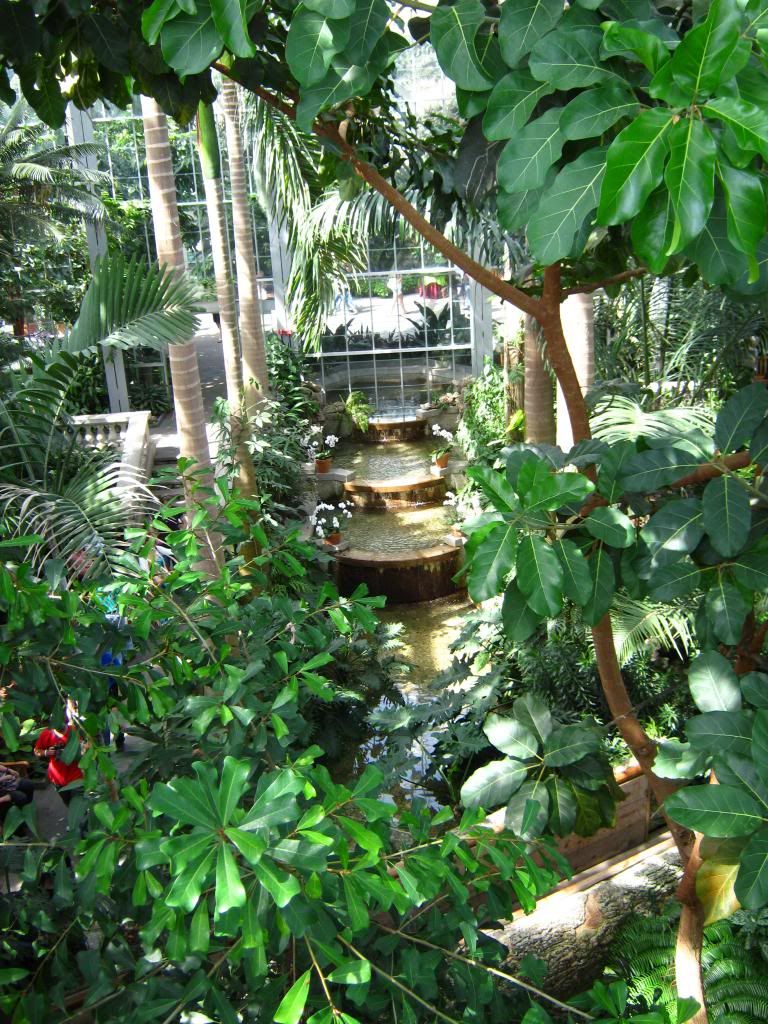
If the weather is a little cold or drizzly, the Dorothy Chapman Fuqua Conservatory has many mature tropical specimens.  Grape ivy (Cissus rhombifolia) creeps along the conservatory ceiling, and the roots stretch all the way down to the floor.  Live quail help control insect populations in the conservatory (watch your step for little chicks!).  Sounds of the birds and bugs come together to create a relaxing melody.

Other features include a children's garden, edible garden, conservation native bog garden, Japanese garden, and the list goes on.  Keep your eyes peeled for the Chihuly glass pieces in the gardens and visitor center.  Be sure to visit the MetroFresh cafe to relax, enjoy refreshments, and reflect on your visit.  The gift shop was also worth a visit, whether you're shopping or window shopping.

Other important considerations when planning your trip:
  • Hours of operation:
    • April - October, 9 a.m. to 7 p.m. Tuesday through Sunday
    • November - March, 9 a.m. to 5 p.m. Tuesday through Sunday
    • Closed Mondays, Thanksgiving, Christmas, and New Years day
  • Admission:
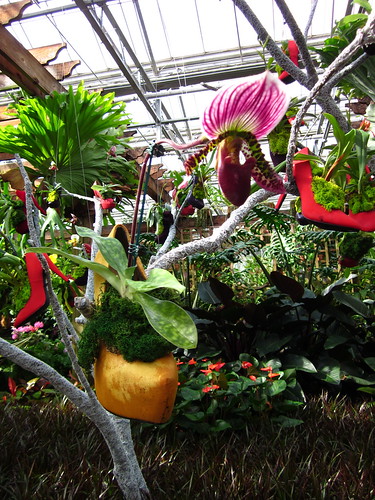
    Lady slipper orchids sit in ladies' slippers
    on stockinged trees in the "Orchid Daze"
    exhibit in the Fuqua Orchid Center
      • Adults: $18.95
      • Youth (3-12): $12.95
      • Members and children under 3: Free
    • Parking:
      • 0 - 30 minutes: Free
      • 31 - 60 minutes: $2
      • Additional 30 minutes: $1
      • Daily Maximum: $15
    • Accessibility:
      • Virtually the entire garden is accessible.  I did not note any areas that could not be reached by one way or another.
      • Wheelchairs available at the Visitors Center on a first come first serve basis.
      • Electric mobility scooters may be rented.
    • Pets:
      • Restricted to service animals only.
      • Dogs are allowed for the annual "Reindog Parade" event.
    • Atlanta Botanic's guide to Garden Etiquette is available for review.
    Atlanta Botanic staff member Julie has a wonderful photo blog - Petal, Thought, Leaf - that catalogues her experiences in the garden.  I follow her, and you should too.  Special thanks to Julie for her brand of Southern hospitality and Morgan for her company!

    To see more photos of my visit to the Atlanta Botanic Garden, check out my flickr stream.

    If you have any questions, ideas, or suggestions, leave a comment or shoot me an email.

    When is the last time that you visited a botanical garden exhibit?  What was your favorite feature?  

    When is the last time that you visited the Atlanta Botanical Garden?  How was your experience?

    "Earth Goddess" was my absolute fav mosaiculture piece in the Atlanta Botanical Garden "Imaginary Worlds" exhibit
    There's plenty to see and do at the Atlanta Botanical Garden in any season

    Sunday, December 9, 2012

    Horticulture for the Holidays: Spotlight on the U.S. Botanic Garden

    The U.S. Botanic Garden's conservatory is
    a tropical escape from D.C.'s winter weather
    For many families, the holiday season is the time to reconnect with loved ones. Some families will traverse the miles to gather at the home of a loved one. Others may take a family vacation and experience someplace new together.

     However you celebrate the holidays, I encourage you to visit a public garden in the area. Many public gardens have holiday activities and displays from tours and workshops to Christmas lights and trains. 

    Last Christmas, I traveled to our nation's capital - Washington D.C. - to take in the sights and to re-visit the United States Botanic Garden.  The garden is tucked away near the Capitol building on the National Mall.  The U.S. Botanic Garden's website states that their mission is "to demonstrate the aesthetic, cultural, economic, therapeutic and ecological importance of plants to the well-being of humankind."

     The conservatory is spectacular at any time of year, with exhibits like the garden court, that features plants that are used in products from food to cosmetics.  Although I prefer to visit the garden during warmer months, it's still worthwhile to peruse exhibits like the rose garden at any time of year.
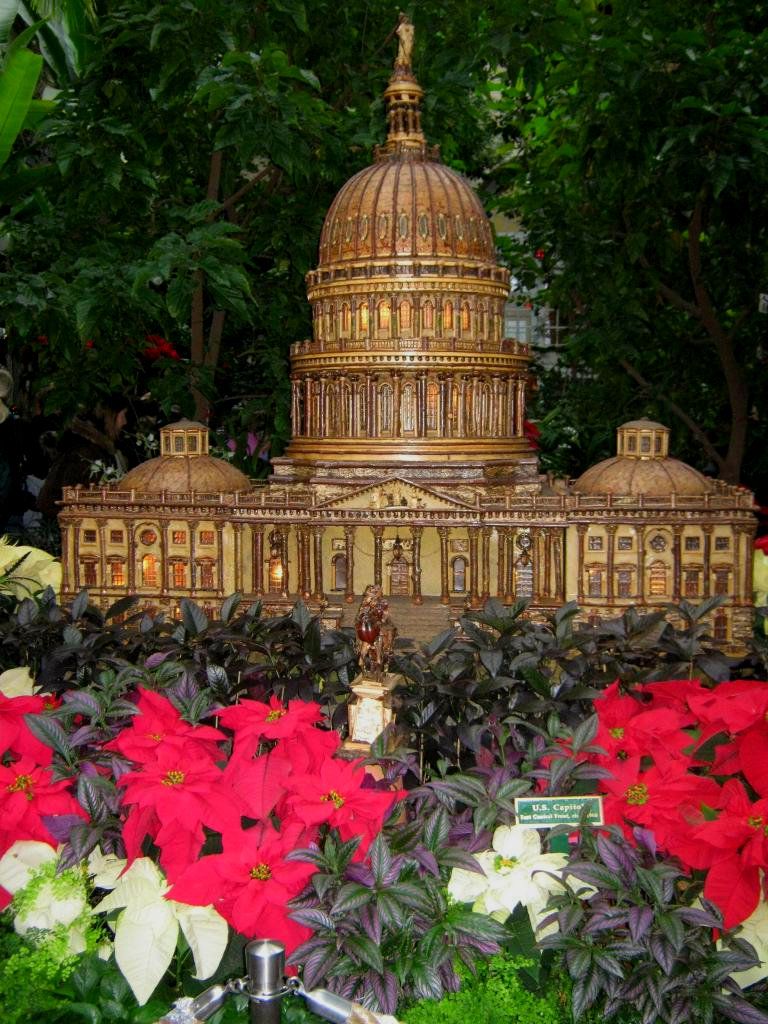
    This plant based model of the capitol is part of
    the USBG holiday exhibit "Seasons Greenings"

    The U.S. Botanic Garden celebrates the holidays with a "Seasons Greenings" exhibit that features a model of the capital, trains, fairy dwellings, and a display of a large collection of poinsettias.  In addition to festive displays, USBG will host live holiday music and workshops.

    The holiday exhibit runs from November 22 to January 1st and the garden will be open for extended hours until 8:00 p.m.  As is true for the rest of the year, a holiday visit to the U.S. Botanic Garden is free to the public.

    If "Season Greenings" 2012 is anything like last year, plan to wait in line for the model trains.  Although the conservatory was slightly crowded, there wasn't any wait to get into the garden or conservatory itself.

    Whether you're able to visit the United States Botanic Garden or a public garden a little closer to home, consider making a garden trip part of your holiday traditions.  You'll be glad you did!

    If you have any questions, ideas, or suggestions, please leave a comment or shoot me an email.

    To see more photos of my trips to the United States Botanic Garden, check out my photobucket story.

    To get more of Amanda, check out The Thrifty Gardener and Plante on Plants.

    Have you ever visited the United States Botanic Garden?  What was your experience there?

    Where is your favorite public garden holiday display?  Where else would you like to visit?


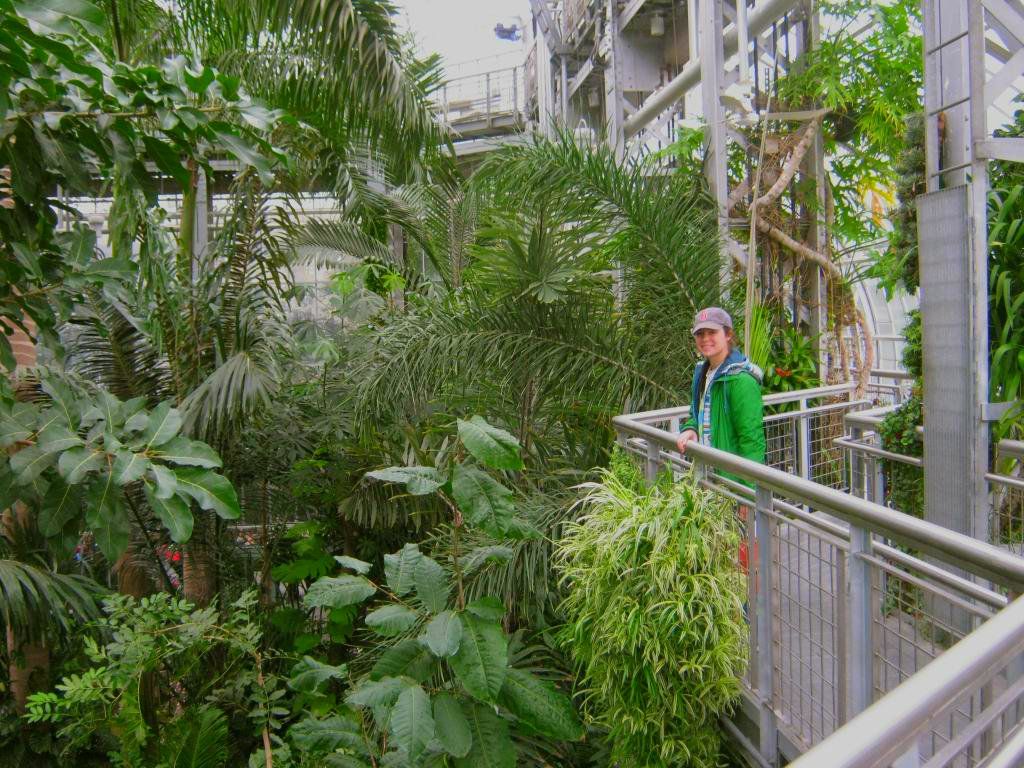
    Me, enjoying our visit to the U.S. Botanic Garden's conservatory over the holidays in 2011


    Located on the mall at Washington D.C., the United States Botanic Garden is lovely to visit any time of year.

    Friday, December 9, 2011

    Beautiful Bellingrath Gardens


    By now, virtually everybody in America has seen the Gulf tourism promotional videos put out by BP. Representatives of restaurants, beaches, and other attractions from Gulf States appear and make a case for vacationing there. One of the attractions that may not have been as recognizable to viewers was Bellingrath Gardens in Mobile, AL. In the spring of 2010, I had the opportunity to visit Bellingrath and interview director Dr. Bill Barrick. I had a great time at the gardens, and hope that you will learn about the gardens from my experience.
    Bellingrath Gardens is located at the estate of the historic home of Mr. and Mrs. Bellingrath in Mobile, Alabama. These gardens first opened to the public in 1934, and its current mission is to preserve the legacy of their founders and enhance the estate landscape. The current gardens director Dr. Bill Barrick executes Bellingrath Gardens’ mission. Dr. Barrick’s educational background is grounded in plant sciences – he has a bachelor’s degree in botany, a master’s in horticulture, and a doctorate in landscape architecture.
    One of the goals of Bellingrath Gardens is to provide a display of plants that are signatures of the landscapes in the Deep South. The spring azalea display is one of the main draws to the gardens – the number and variety of azaleas existing in the gardens is amazing. If you’re an azalea fan, you need to plan a trip to Bellingrath this spring! Although Bellingrath Gardens has an extensive azalea collection, they to not have any certified plant collections. Throughout the entire gardens, I only observed one plant that had a label.
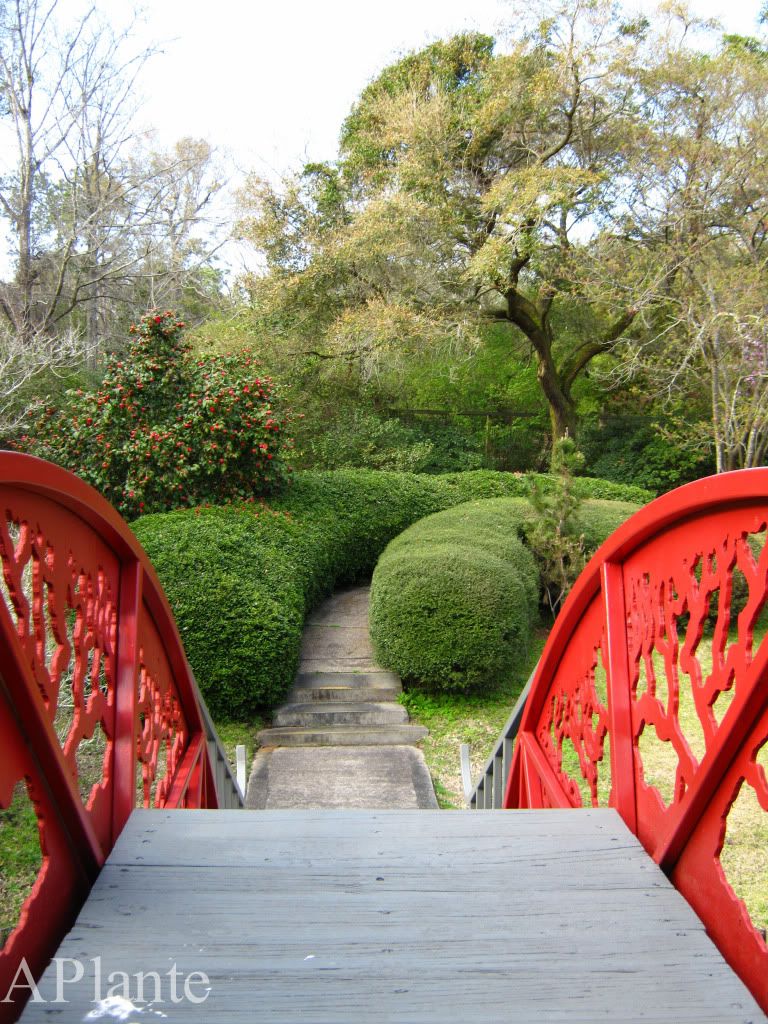
    If you’re looking for year round interest, Bellingrath has more than just azaleas. Around the house is an absolutely stunning garden full of fountains. The Bayou Riverwalk is a great area to relax and observe the natural landscape. Probably my favorite spot in Bellingrath was their Asian American garden. The tranquility and beauty of the garden tempted me to remain there the rest of the day.
    If you like to plan your visits based on seasonal events, Bellingrath has more than just spring azaleas. Following the spring flowers, Bellingrath’s second biggest event is their holiday light show “Magic Christmas in Lights”. In order to draw visitors to the gardens throughout the year, Bellingrath’s schedule includes many workshops, booksignings, a flower festival, and even car shows.
    The gardens are committed to environmental education and offer a variety of educational workshops to children and adults. Though their mission is not educational, it lends itself easily to establishing an educational message.  A great deal of the garden is formal and cultured, however, the Bayou Riverwalk was aside to educate visitors about native plants, animals, and the ecosystem. In addition to environmental education, Bellingrath Gardens offers weekly classes to the community.
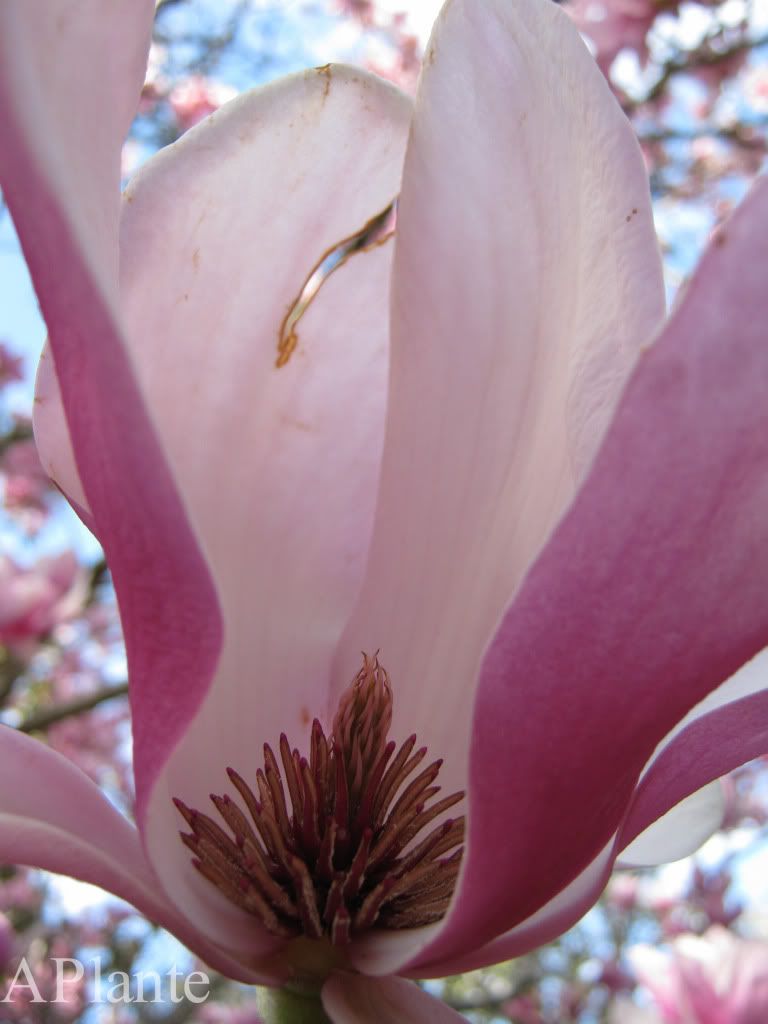
    The subtle smells of saucer magnolias planted periodically behind the high azalea hedges encouraged me to explore the landscape further by continuing down the walkway, and enticed me even further into the landscape despite the fact that the gardens signature azaleas were not yet in bloom. There was an effective use of color in the landscape, which played off the mystery of curving paths and high hedges. The sound of water was an especially effective design element around the Bellengrath home. There were many garden rooms to explore, and without the sound of trickling water from fountains I would probably not have happened upon a few of the garden rooms. I am not sure if mystery was an intentional element of this landscape, but it was present in all of the garden zones and rooms. Even by the home where there was a more formal style, the raised hedges piqued my curiosity as to what was on the other side.
    I am not too proud to admit that I did get lost on this visit. Very lost. I got so turned around that I almost missed my interview with Dr. Barrick. When I had purchased my ticket, I had picked up a brochure and headed out, assuming that there would be a map inside the brochure. Later when I realized that I was lost, I found (to my dismay) that the brochure did not contain a map. The maps were actually located in the gift shop, in the building right next to where tickets can be purchased. If it would not detract from the beauty of the gardens too much, my recommendation would be that a few large maps be posted for wanderers such as I.
    Aside from Dr. Barrick, the only Bellingrath Gardens employees I came into contact with were on the telephone when I scheduled my appointment, at the welcome center where I bought my ticket, and in the gift shop where I was to meet with Dr. Barrick. All the employees were extremely polite and everybody was wearing a smile. Within the gardens, there were several courteous signs, and each of them used the word “please”. If that isn’t southern hospitality, I don’t know what is!
    The plant material was in fantastic shape, though only one Bellingrath Gardens employee has any professional training in horticulture, . I did not observe any dead or diseased plants on the entire property, and only one specimen had observable insect problems. The grass was all mowed and the fountains were all very clean. I did not find any garden employees at work during my visit, but it was evident that they had been there recently.
    It was obvious that safety was a priority within the gardens. Safety cones were placed where there was standing water or loose bricks. Many of the steps were marked with bright yellow edges, and there were safety railings virtually throughout the gardens. There was some standing water in areas of a marble path by the historic residence that may have been slippery, and there were orange traffic cones strategically placed around the standing water to inform visitors of the potential hazard. The day before my visit there had been a rainstorm, and this made areas that had stone steps and paths a bit slippery. The thing to remember is that the gardens make it a point to go out and mark potentially dangerous areas.
    Most areas of the gardens are ADA accessible, with six foot wide paved paths. In my interview with Dr. Barrick, I asked about the garden’s plans for increasing ADA accessibility for the handful of areas around the gardens that may be difficult for a person in a wheelchair or walker to maneuver. The director was honest: while ADA accessibility is an important aspect for visitors, updating exisitng structures in and around the historic residence would conflict with the gardens mission of preservation. All new and updated displays are compliant with ADA rules, but unfortunately the lovely home and garden may be difficult for a physically disadvantaged person to experience. If you are a garden enthusiast who is restricted to a wheelchair or walker, please don’t let this information dissaude you from visitng Bellingrath. The gardens cover a very large area that has a wide variety of displays. When you visit the gardens you will certainly have plenty of interesting areas to visit. If you have limited mobility but do not have your own wheelchair, the gardens rent out wheelchairs in the front entrance for only $5.00.
    If you’re a garden enthusiast who has pets, it’s worth mentioning that Bellingrath does not allow dogs on the property. If you are traveling with pets, the gardens do have a “Pet Motel” where you can leave your dogs in an enclosed area while you enjoy the gardens.
    I immensely enjoyed my trip to Bellingrath gardens. There was plenty of material to pique my interest. The gardens were well maintained with no dead or diseased plants worth noting, and members of the staff who crossed my path were extremely helpful and friendly. In addition to being a beautiful garden, Bellingrath used its appeal to teach visitors about ecosystems and the native environment. I walked away from Bellingrath Gardens with the impression that it was a place of beauty maintained with a polite and caring attitude. For only $12.00 to visit the gardens ($6.50 ages 5-12), I felt that it was well spent on an afternoon of wonder. If you’re looking for history, beauty, plants, and good old-fashioned Southern Hospitality, Bellingrath Gardens just can’t be beat!
    Special thanks to Dr. Bill Barrick for meeting with me to answer my questions, and Mrs. Wendy Prothro Howard for proof reading this post! 
    For more information about Bellingrath Gardens, their website can be found at: http://www.bellingrath.org/

    To see more of my photos from my visit, check out my photobucket account at: http://photobucket.com/aplantebellingrathgardens 

    If you have any questions, comments, ideas or suggestions, I love to get email!

    For more information about me, Amanda Plante, check me out at: