By now, virtually everybody in America has seen the Gulf tourism promotional videos put out by BP. Representatives of restaurants, beaches, and other attractions from Gulf States appear and make a case for vacationing there. One of the attractions that may not have been as recognizable to viewers was Bellingrath Gardens in Mobile, AL. In the spring of 2010, I had the opportunity to visit Bellingrath and interview director Dr. Bill Barrick. I had a great time at the gardens, and hope that you will learn about the gardens from my experience.
Bellingrath Gardens is located at the estate of the historic home of Mr. and Mrs. Bellingrath in Mobile, Alabama. These gardens first opened to the public in 1934, and its current mission is to preserve the legacy of their founders and enhance the estate landscape. The current gardens director Dr. Bill Barrick executes Bellingrath Gardens’ mission. Dr. Barrick’s educational background is grounded in plant sciences – he has a bachelor’s degree in botany, a master’s in horticulture, and a doctorate in landscape architecture.
One of the goals of Bellingrath Gardens is to provide a display of plants that are signatures of the landscapes in the Deep South. The spring azalea display is one of the main draws to the gardens

– the number and variety of azaleas existing in the gardens is amazing. If you’re an azalea fan, you need to plan a trip to Bellingrath this spring! Although Bellingrath Gardens has an extensive azalea collection, they to not have any certified plant collections. Throughout the entire gardens, I only observed one plant that had a label.
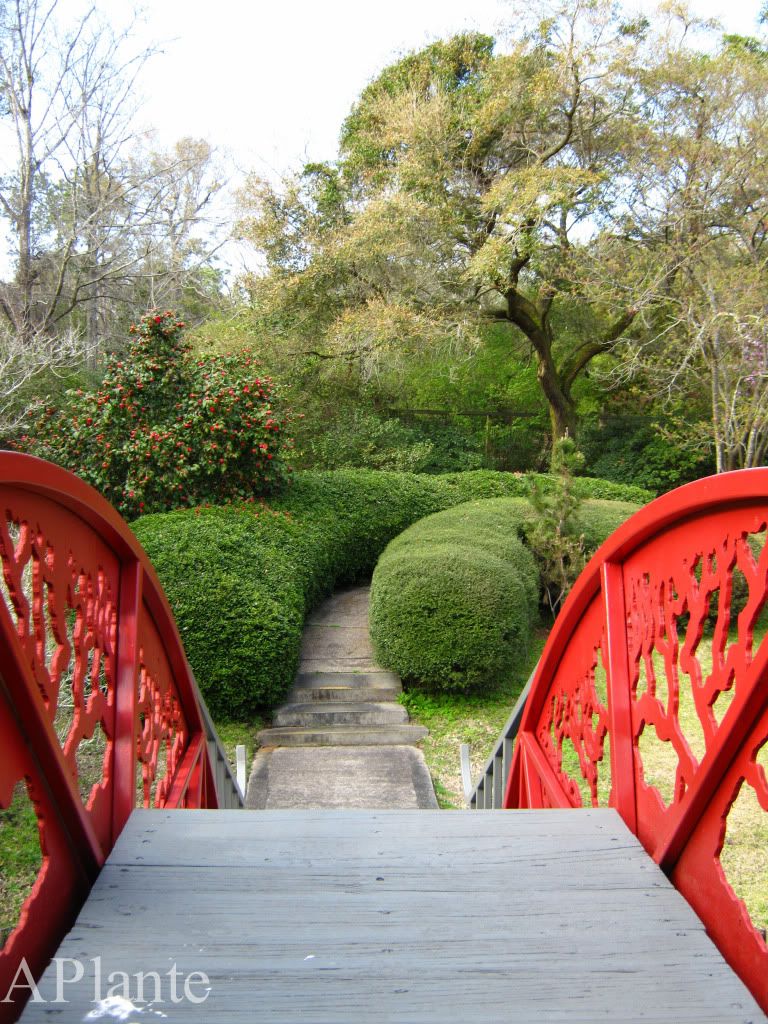
If you’re looking for year round interest, Bellingrath has more than just azaleas. Around the house is an absolutely stunning garden full of fountains. The Bayou Riverwalk is a great area to relax and observe the natural landscape. Probably my favorite spot in Bellingrath was their Asian American garden. The tranquility and beauty of the garden tempted me to remain there the rest of the day.
If you like to plan your visits based on seasonal events, Bellingrath has more than just spring azaleas. Following the spring flowers, Bellingrath’s second biggest event is their holiday light show “Magic Christmas in Lights”. In order to draw visitors to the gardens throughout the year, Bellingrath’s schedule includes many workshops, booksignings, a flower festival, and even car shows.
The gardens are committed to environmental education and offer a variety of educational workshops to children and adults. Though their mission is not educational, it lends itself easily to establishing an educational message. A great deal

of the garden is formal and cultured, however, the Bayou Riverwalk was aside to educate visitors about native plants, animals, and the ecosystem. In addition to environmental education, Bellingrath Gardens offers weekly classes to the community.
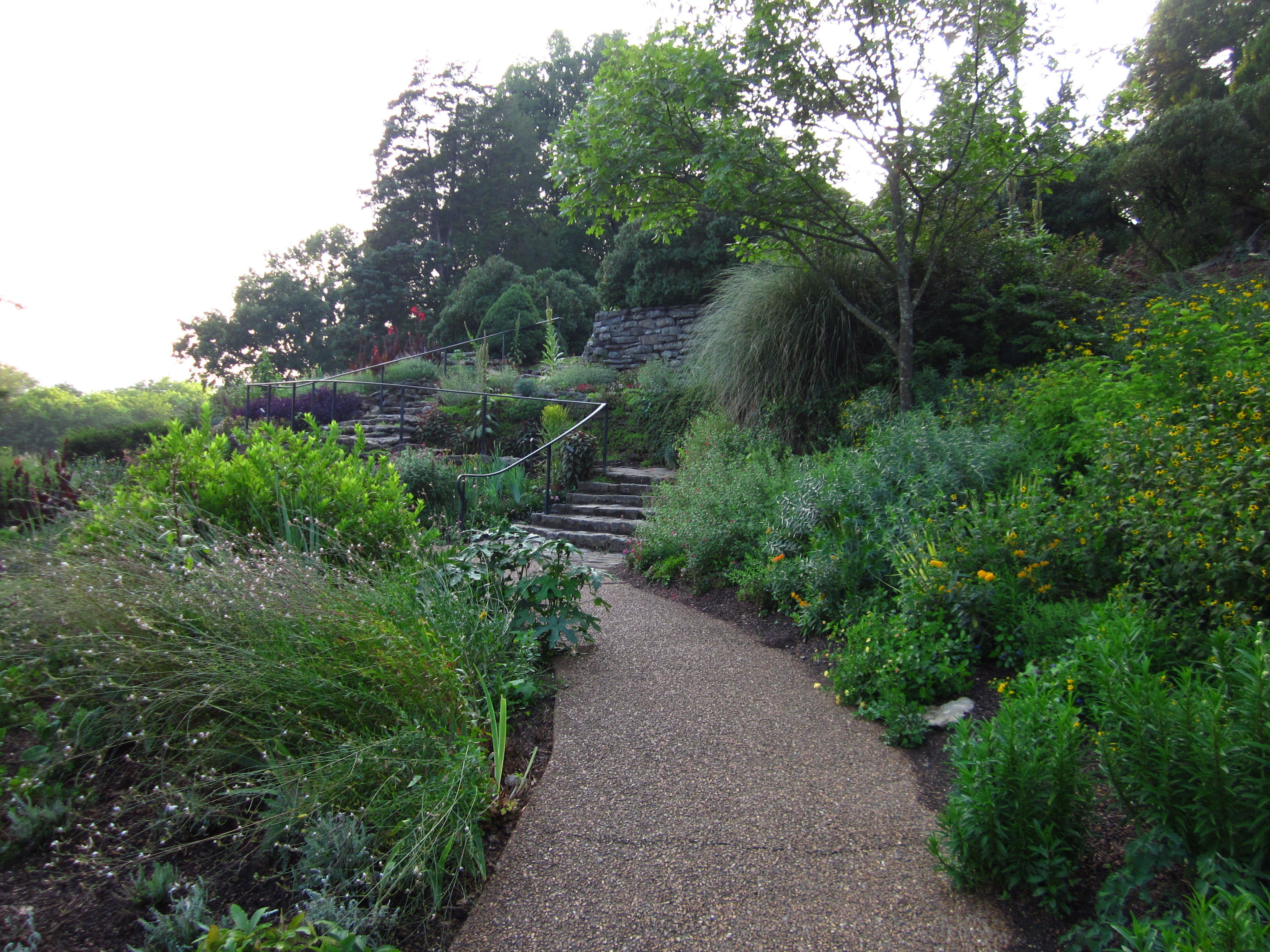
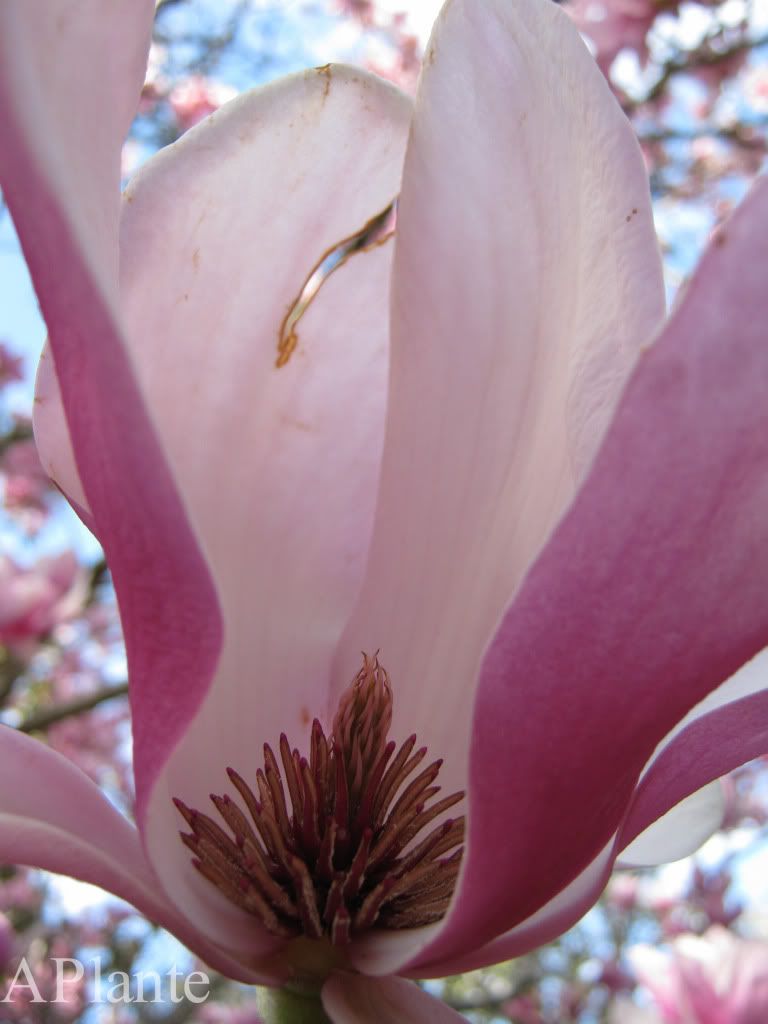
The subtle smells of saucer magnolias planted periodically behind the high azalea hedges encouraged me to explore the landscape further by continuing down the walkway, and enticed me even further into the landscape despite the fact that the gardens signature azaleas were not yet in bloom. There was an effective use of color in the landscape, which played off the mystery of curving paths and high hedges. The sound of water was an especially effective design element around the Bellengrath home. There were many garden rooms to explore, and without the sound of trickling water from fountains I would probably not have happened upon a few of the garden rooms. I am not sure if mystery was an intentional element of this landscape, but it was present in all of the garden zones and rooms. Even by the home where there was a more formal style, the raised hedges piqued my curiosity as to what was on the other side.
I am not too proud

to admit that I did get lost on this visit. Very lost. I got so turned around that I almost missed my interview with Dr. Barrick. When I had purchased my ticket, I had picked up a brochure and headed out, assuming that there would be a map inside the brochure. Later when I realized that I was lost, I found (to my dismay) that the brochure did not contain a map. The maps were actually located in the gift shop, in the building right next to where tickets can be purchased. If it would not detract from the beauty of the gardens too much, my recommendation would be that a few large maps be posted for wanderers such as I.
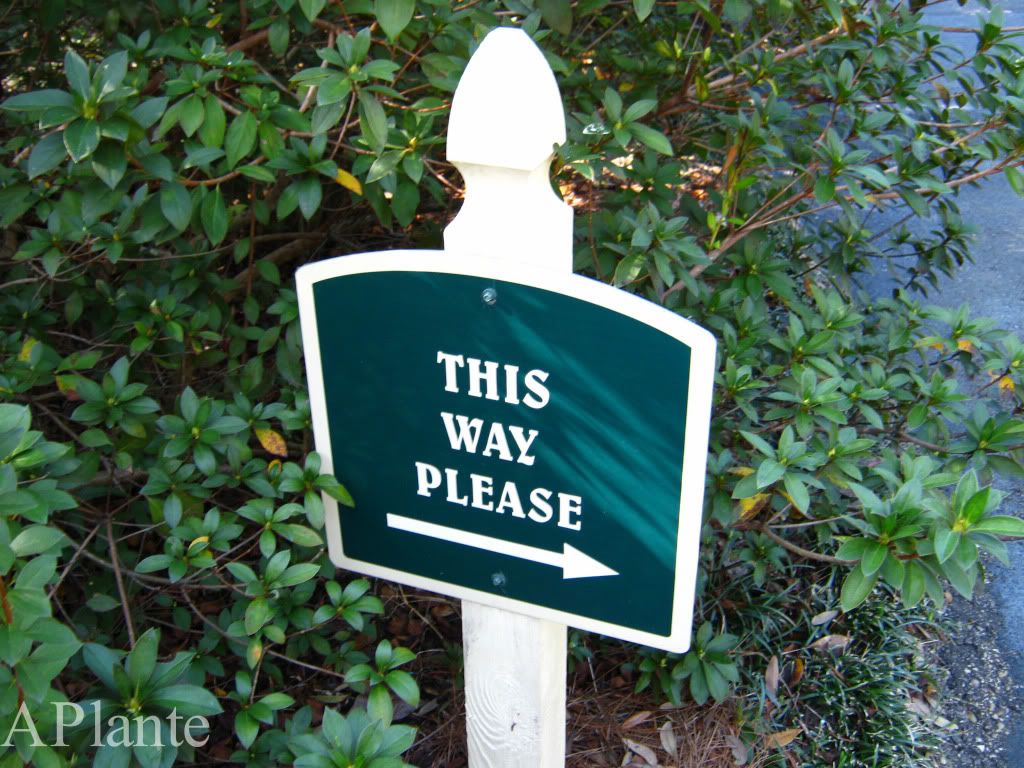
Aside from Dr. Barrick, the only Bellingrath Gardens employees I came into contact with were on the telephone when I scheduled my appointment, at the welcome center where I bought my ticket, and in the gift shop where I was to meet with Dr. Barrick. All the employees were extremely polite and everybody was wearing a smile. Within the gardens, there were several courteous signs, and each of them used the word “please”. If that isn’t southern hospitality, I don’t know what is!
The plant material was in fantastic shape, though only one Bellingrath Gardens employee has any professional training in horticulture, . I did not observe any dead or diseased plants on the entire property, and only one specimen had observable insect problems. The grass was all mowed and the fountains were all very clean. I did not find any garden employees at work during my visit, but it was evident that they had been there recently.
It was obvious that safety was a priority within the gardens. Safety cones were placed where there was standing water or loose bricks. Many of the steps were marked with bright yellow edges, and there were safety railings virtually throughout the gardens. There was some standing water in areas of a marble path by the historic residence that may have been slippery, and there were orange traffic cones strategically placed around the standing water to inform visitors of the

potential hazard. The day before my visit there had been a rainstorm, and this made areas that had stone steps and paths a bit slippery. The thing to remember is that the gardens make it a point to go out and mark potentially dangerous areas.
Most areas of the gardens are ADA accessible, with six foot wide paved paths. In my interview with Dr. Barrick, I asked about the garden’s plans for increasing ADA accessibility for the handful of areas around the gardens that may be difficult for a person in a wheelchair or walker to maneuver. The director was honest: while ADA accessibility is an important aspect for visitors, updating exisitng structures in and around the historic residence would conflict with the gardens mission of preservation. All new and updated displays are compliant with ADA rules, but unfortunately the lovely home and garden may be difficult for a physically disadvantaged person to experience. If you are a garden enthusiast who is restricted to a wheelchair or walker, please don’t let this information dissaude you from visitng Bellingrath. The gardens cover a very large area that has a wide variety of displays. When you visit the gardens you will certainly have plenty of interesting areas to visit. If you have limited mobility but do not have your own wheelchair, the gardens rent out wheelchairs in the front entrance for only $5.00.
If you’re a garden enthusiast who has pets, it’s worth mentioning that Bellingrath does not allow dogs on the property. If you are traveling with pets, the gardens do have a “Pet Motel” where you can leave your dogs in an enclosed area while you enjoy the gardens.
I immensely enjoyed my trip to Bellingrath gardens. T

here was plenty of material to pique my interest. The gardens were well maintained with no dead or diseased plants worth noting, and members of the staff who crossed my path were extremely helpful and friendly. In addition to being a beautiful garden, Bellingrath used its appeal to teach visitors about ecosystems and the native environment. I walked away from Bellingrath Gardens with the impression that it was a place of beauty maintained with a polite and caring attitude. For only $12.00 to visit the gardens ($6.50 ages 5-12), I felt that it was well spent on an afternoon of wonder. If you’re looking for history, beauty, plants, and good old-fashioned Southern Hospitality, Bellingrath Gardens just can’t be beat!
Special thanks
to Dr. Bill Barrick for meeting with me to answer my questions, and
Mrs. Wendy Prothro Howard for proof reading this post!
If you have any questions, comments, ideas or suggestions, I love to get
email!
For more information about me, Amanda Plante, check me out at: