Showing posts with label Plante. Show all posts

Friday, November 1, 2013

The North Carolina Arboretum -- "Some Assembly Required"

Fall is in full swing at the NC Arboretum
The autumn winds are blowing, drawing us out to see deciduous trees in all their gaudy splendor.  There are few places in the Southeast U.S. that compare to Asheville, North Carolina for viewing fall foliage.  The North Carolina Arboretum is one of Asheville's treasures, and a great place to explore the colors of autumn.

The 434 acre property boasts several trails of varying difficulty, diverse and well-maintained garden areas, and two very nice buildings for visitors -- the Baker Exhibit Center and the Education Center.  I visited the NC Arboretum for the first time earlier in October.  Although the whole property was dazzling, my favorite areas were in the main garden area.

Bonsai displays may use traditional or unique plant
material, like this grove of bonsai bald cypress.
The Bonsai Exhibition Garden was especially impressive.  Although the specimens were younger than bonsai exhibits that may be found at other gardens, I thought the variety of plants and styles were much better than other displays I've seen.  In addition to the traditional Japanese maples, junipers and pines, the exhibit included specimens native to the continent and the southeast region, like bald cypress and hornbeam.  Although the bonsai specimens are the main attraction, the exhibition garden is a really lovely setting for the display.  Also, the signage was attractive and informative.

The Gardener's Green Shed showcases
water-saving methods for the landscape
The Quilt Garden is usually a "must see" area.  I visited during a kind of weird in-between period where their summer annuals had been removed but it was too early to add their winter interest plants.  Plants in the quilt garden are arranged in really interesting patterns.  Visitors can walk between squares to see the pattern up close or view from an overlook to see the whole picture.

A couple other areas include the Heritage Garden that showcases ornamental plants that have a history as utility plants in the appalachian region, the Dickinson Holly Garden that showcases a variety of hollies and their uses in the landscape.

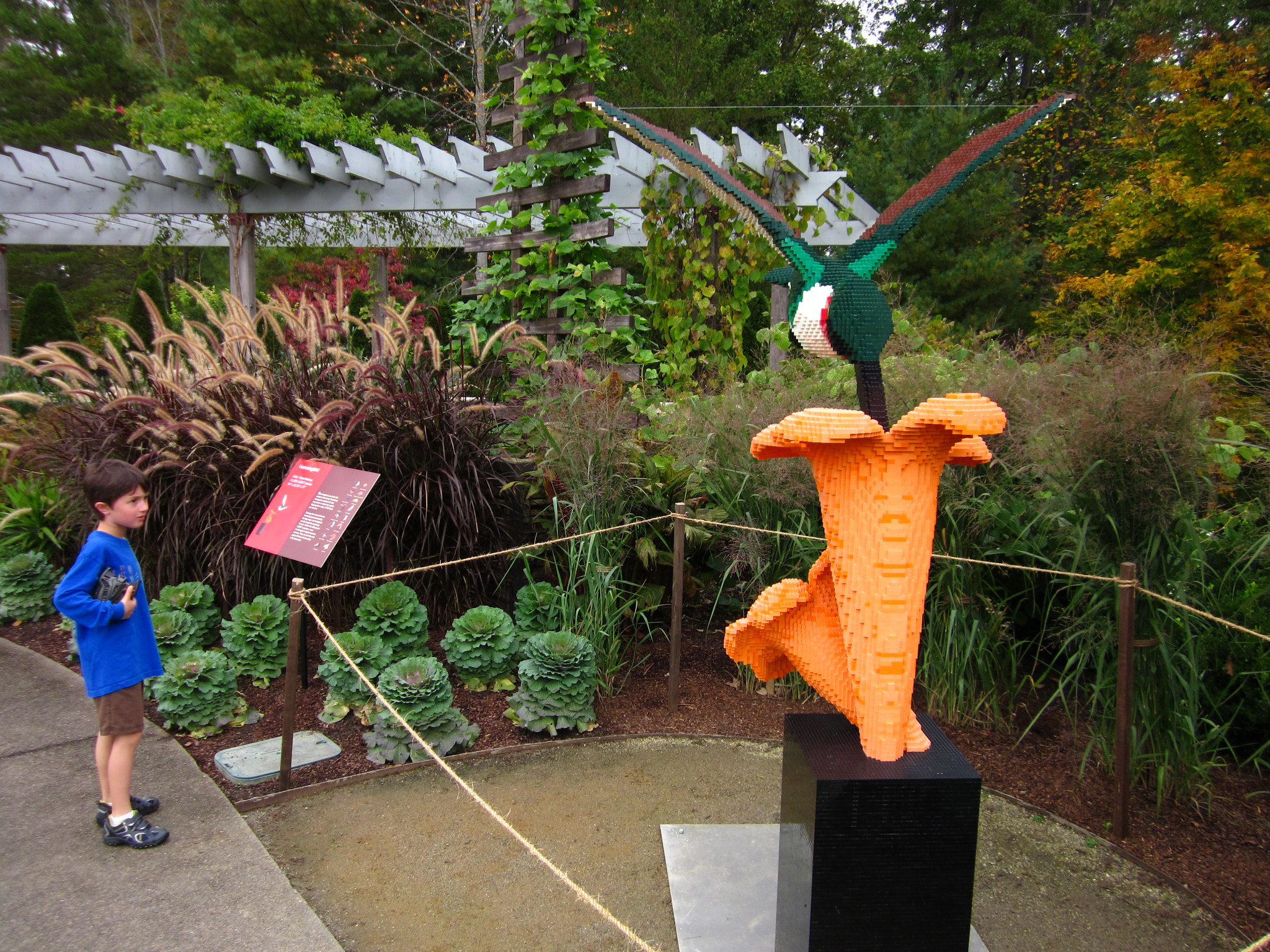
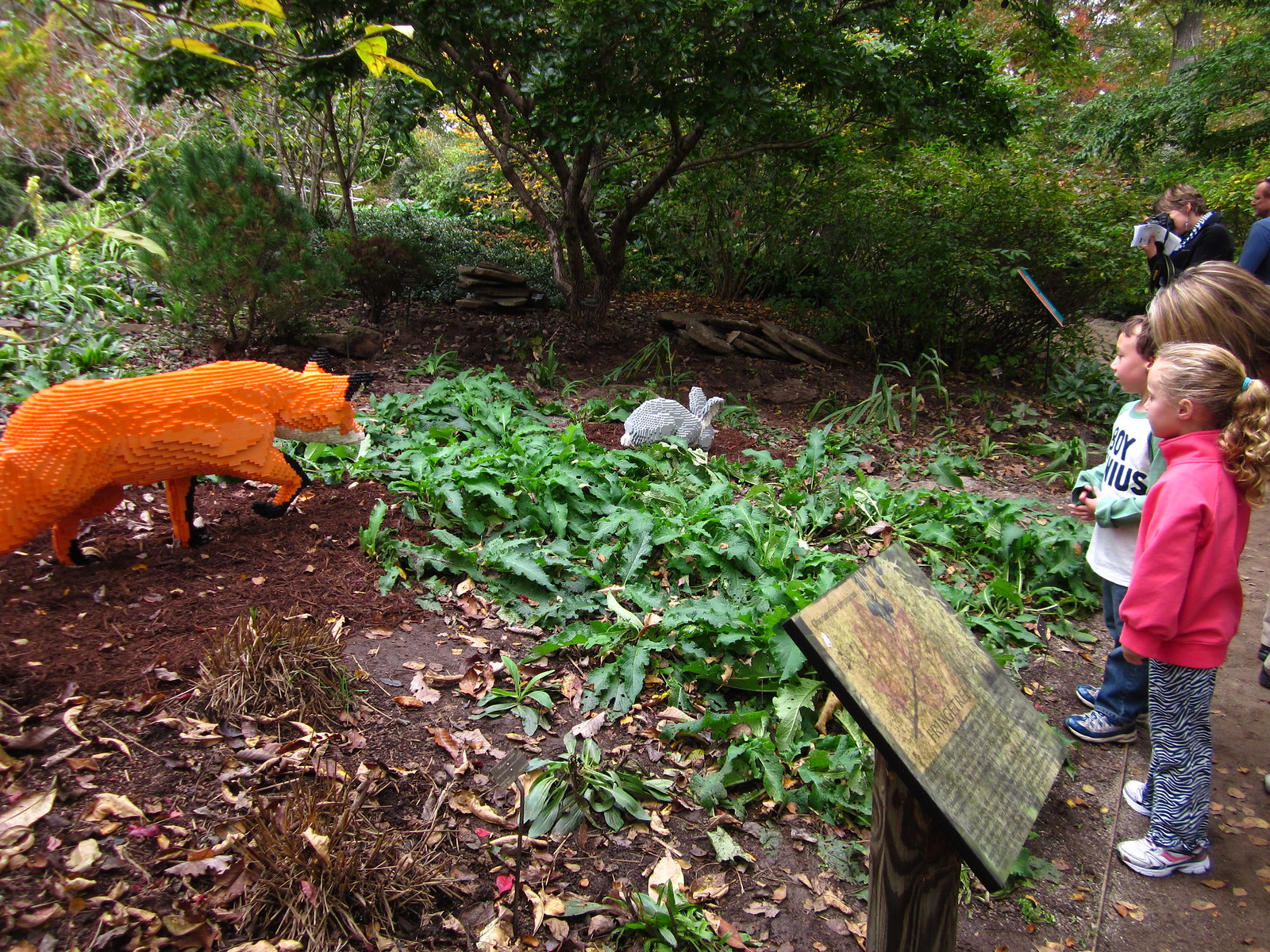
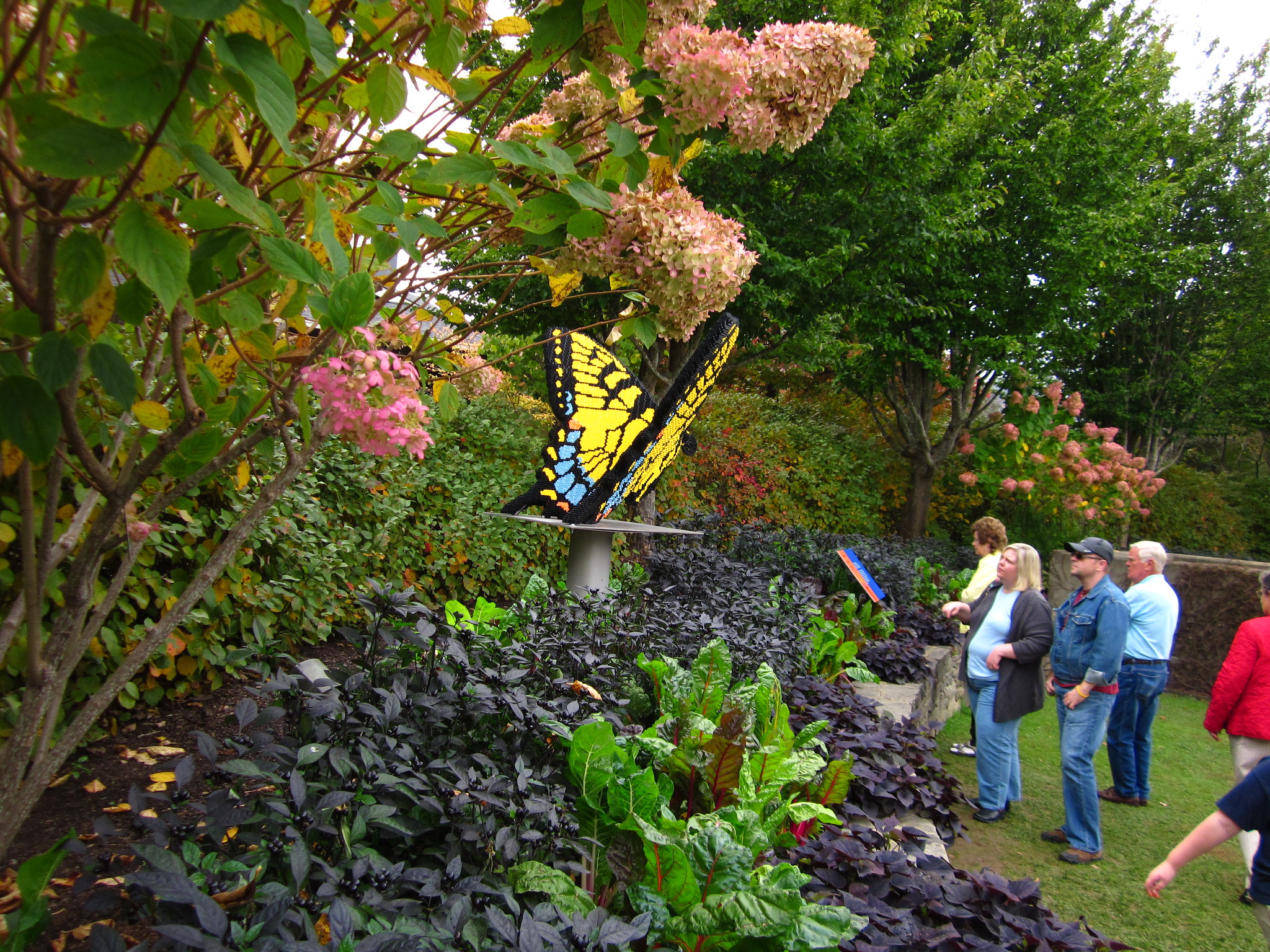
Although I was originally drawn to the NC Arboretum to view fall foliage and explore new gardens, I was in for a special treat.  Right now the arboretum has LEGO nature-inspired art pieces on display throughout the garden as a part of their "Some Assembly Required" exhibit.  Of the 27 sculptures that are part of the exhibit, 15 are places outdoors throughout the gardens.  Created by certified LEGO artist Sean Kenney, pieces range in size and style, from a intricate phalaenopsis orchid to a life-size lawnmower.

Young folks were really interested in
"Some Assembly Required" LEGO statutes
The morning of my visit, it seemed like most folks were there to see the LEGO art.  Finding each piece was like an exciting scavenger hunt for young visitors.  Children cried with joy when they discovered the next sculpture, then fell into silent, wide-eyed awe as they took in the intricacy of the display.  If you know a LEGO lover of any age, definitely check out "Some Assembly Required" at the NC Arboretum this fall and winter.  The LEGOs will be on display until January 5, 2014.

The arboretum offers several features intended to enhance the visitor experience, including cell phone tours, geocaching, clean bathrooms, water fountains, and other amenities available for use in their buildings.  The Savory Thyme Cafe is housed within the Education Building, and offers local, natural, and organic selections.  The Connections Gallery gift shop in the Baker Exhibit Center had a nice selection of horticultural, local, and touristy items for sale.

Other important considerations when planning your visit:

  • Hours of operation:
    • April 1 to October 31, 8:00 a.m. to 9:00 p.m.
    • November 1 to March 31, 8:00 a.m. to 7:00 p.m.
    • Baker Exhibit Center, Education Center, Bonsai Exhibition Garden, 9:00 a.m. to 5:00 p.m.
  • Admission: FREE
  • Parking: 
    • FREE the first Tuesday of each month
    • $8 personal vehicles
    • $30 commercial vehicles
    • $50 buses
    • Free for members of the NC Arboretum
  • Accessibility:
    • The garden areas, production greenhouse, Baker Exhibit Center and the Education Center are wheelchair accessible.  The trails have varying levels of accessibility.
    • Wheelchairs are available to use free of charge, and may be borrowed from the Baker Exhibit Center and the Education Center.
  • Pets:
    • Dogs may visit the gardens and arboretum areas as long as they are kept on a leash.  Owners are responsible for cleaning up after their pets.
    • Service animals are allowed inside buildings.

The arboretum is very easy to find from I-40, with plenty of signage guiding you there from the interstate.  However, when you plan your trip to the NC Arboretum, consider taking the road less traveled.  In addition to hopping on I-40, some folks could also travel on the Blue Ridge Parkway or 19 to Cherokee then up 411 through the Great Smoky Mountains National Park.

Special thanks to my co-hort Nathan and his friend Tiffany for keeping me company in the Arboretum. Also thank-you Jared in Raleigh and Nathan in Johnson City for helping me triangulate the peak time to visit Asheville.

To see more photos of my visit to the North Carolina Arboretum, check out my flickr set.

If you have any questions, ideas, or suggestions, please feel welcome to leave a comment on this post or shoot me an email.

Tell me about your last visit to a garden or arboretum.  What was your favorite part?

What's the most unusual display or exhibit you've seen at a garden or arboretum?

Young folks were really interested in "Some Assembly Required" LEGO statutes

Friday, July 12, 2013

Light Up the Night at Cheekwood Botanical Garden

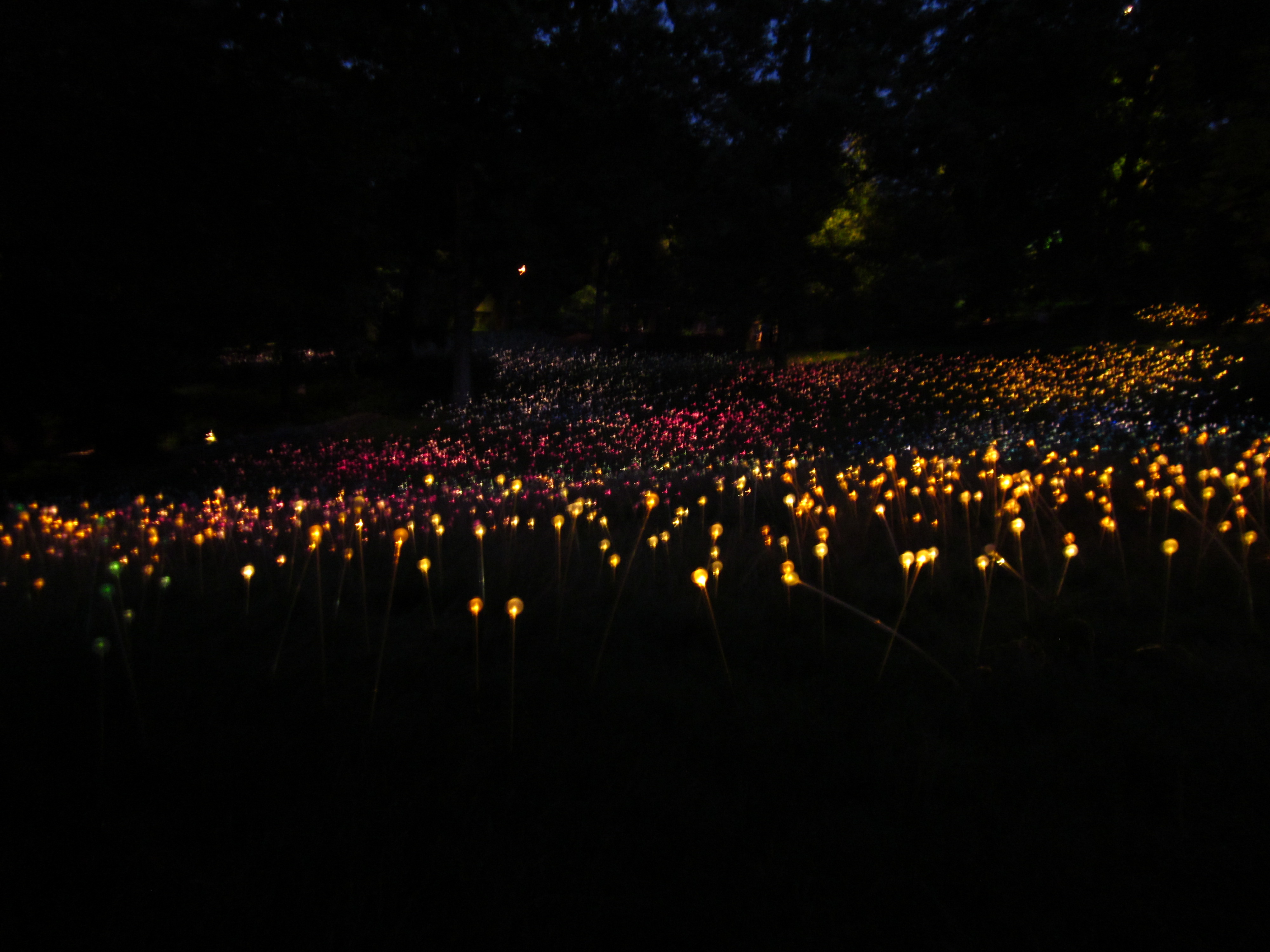
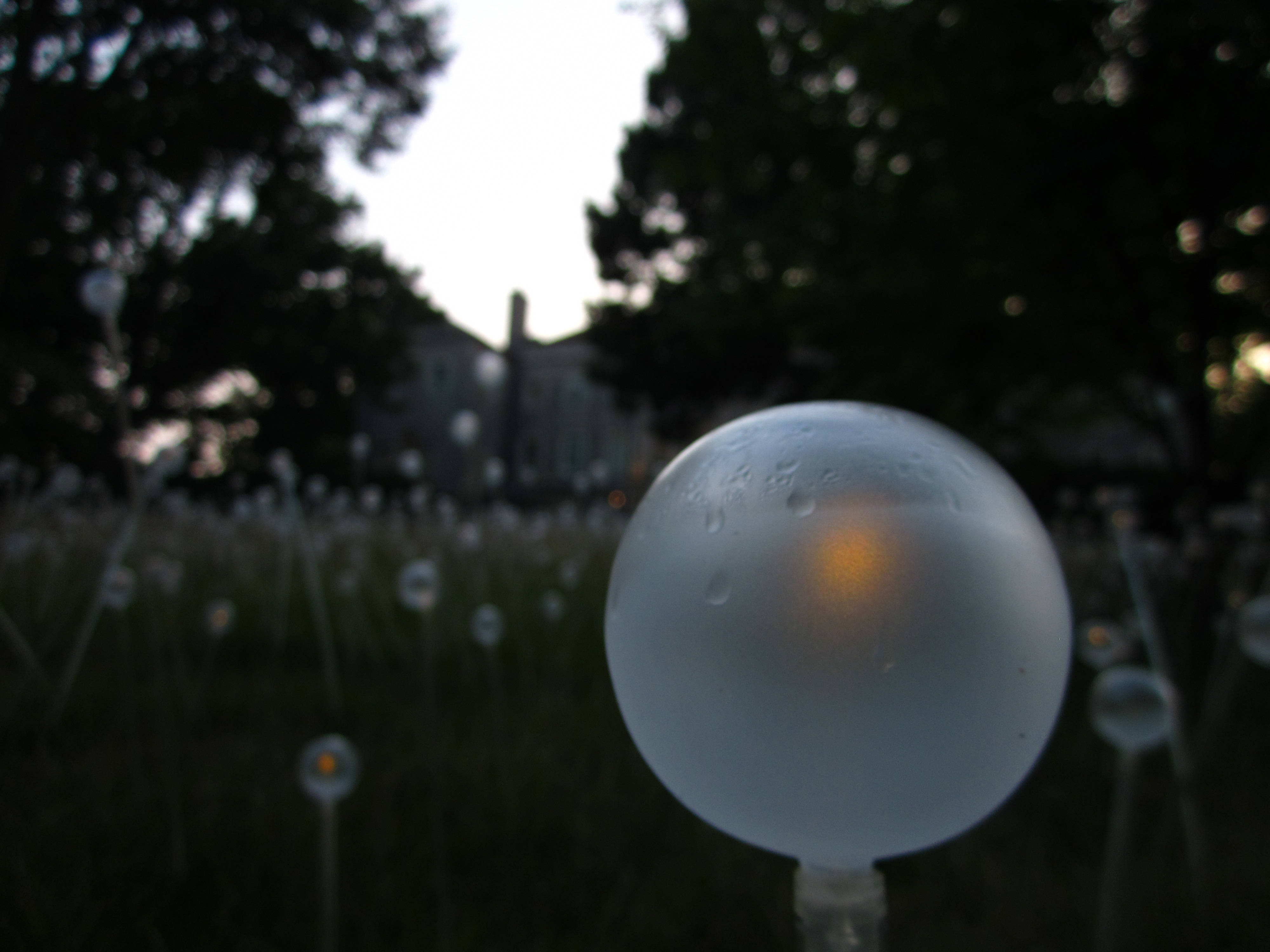
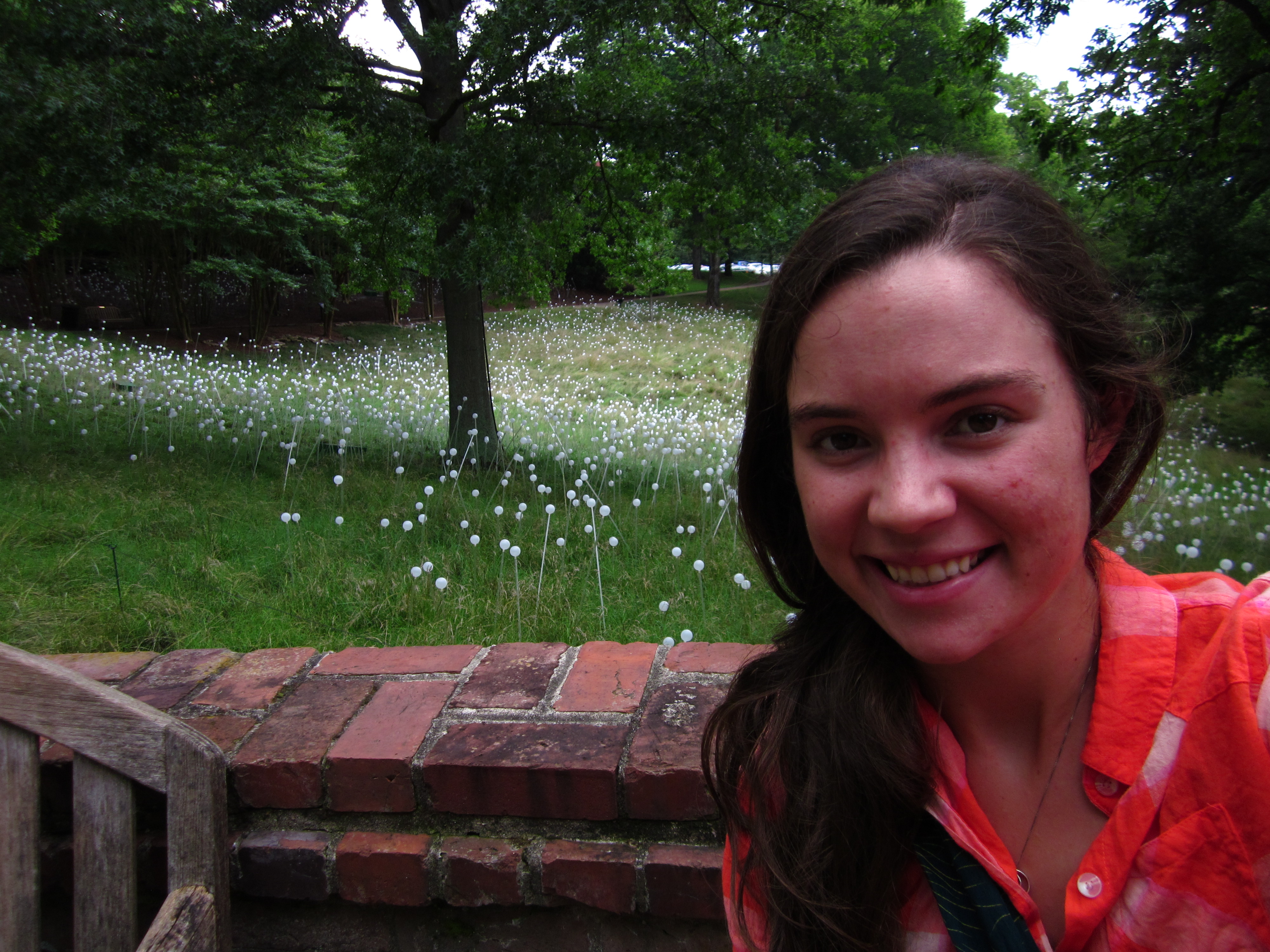
Bruce Munro's Field of Light at Cheekwood Botanic Garden
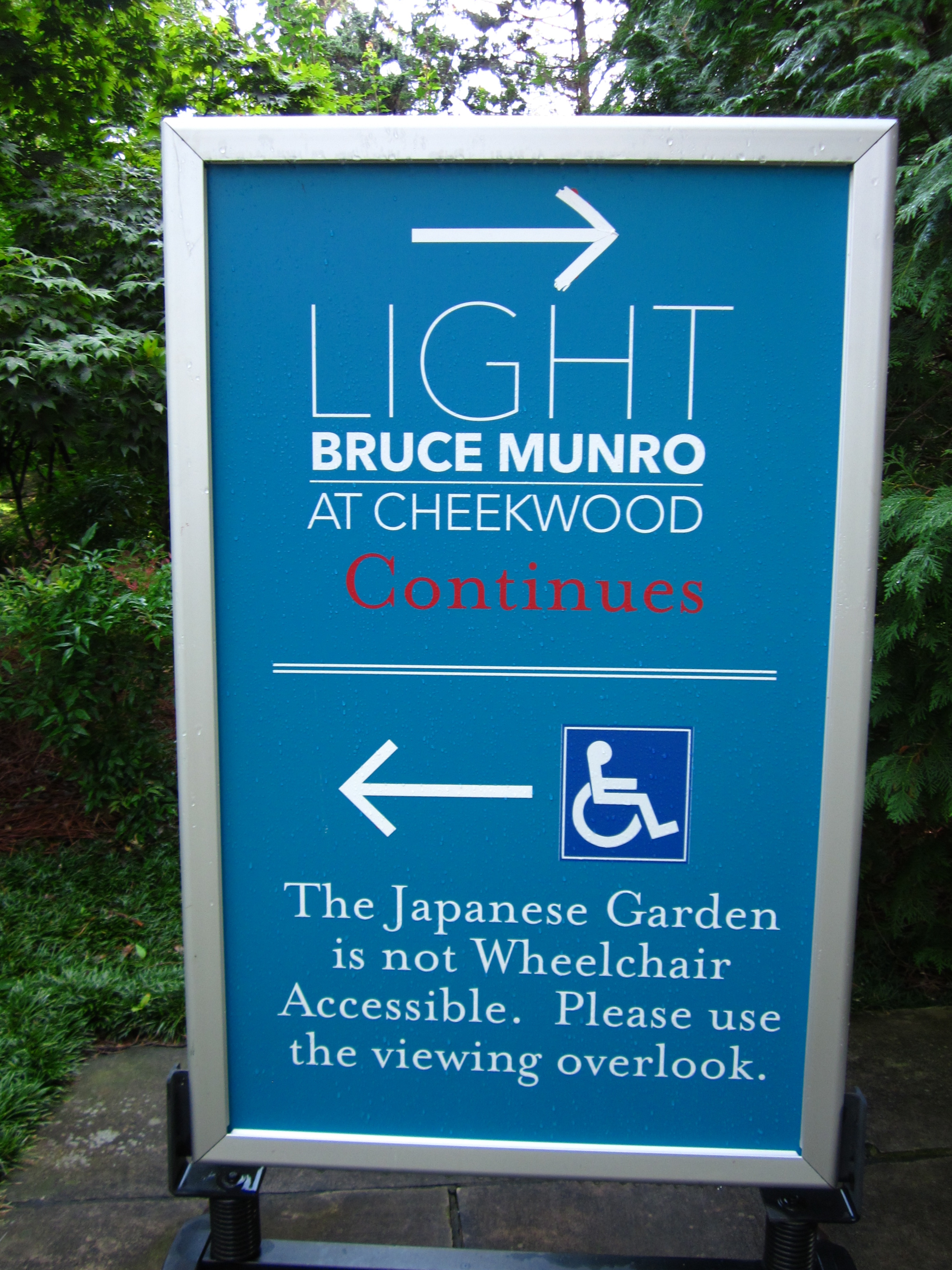
Garden aficionados may go out of their way to visit a garden they've never seen before.  After the first visit, it often takes a special event to coax visitors into returning.  Nashville's Cheekwood Botanical Garden and Museum cooks up something special every year, from Chihuly Nights to Big Bugs.  When I heard about this year's Bruce Munro LIGHT, that piqued my interest enough to spur a drive across the state and revisit this fabulous garden.

Munro's dazzling displays feature fiber optic light as art.  The outdoor section of the exhibit has seven arrangements, including firefly-like lights throughout the bamboo grove in the Japanese garden, 40 water towers near the Botanic Hall that collectively contain over 10,000 recycled water bottles, and a massive field of light that fills the open space between the East Gardens and the Museum of Art with 20,000 glass spheres.  Wow.

These towers are made of recycled water bottles.
Each bottle contains thread for fiber optic lights.
Bruce also created several pieces that are showcased within the Museum of Art.  Keep your eyes peeled for my favorite from the indoor collection -- the interactive piece "Pop Princess."  I would have missed it completely if a kindly security guard in the adjacent stairwell had not walked me through it.

Garden hours were extended until 11:00 p.m. for optimum viewing experience.  During my visit mid-July, the show started just after 8:00.  If you're not much of a night owl, consider visiting later in the year when the days are longer.  Plan to visit before the exhibit closes November 10th.

Music lovers will especially enjoy the lights during "First Tennessee Fridays".  Live music will be scattered at several locations around the garden.  However, first fridays do get very crowded.  If you'd prefer to avoid large crowds, the exhibit is less busy on Wednesdays and Thursdays.

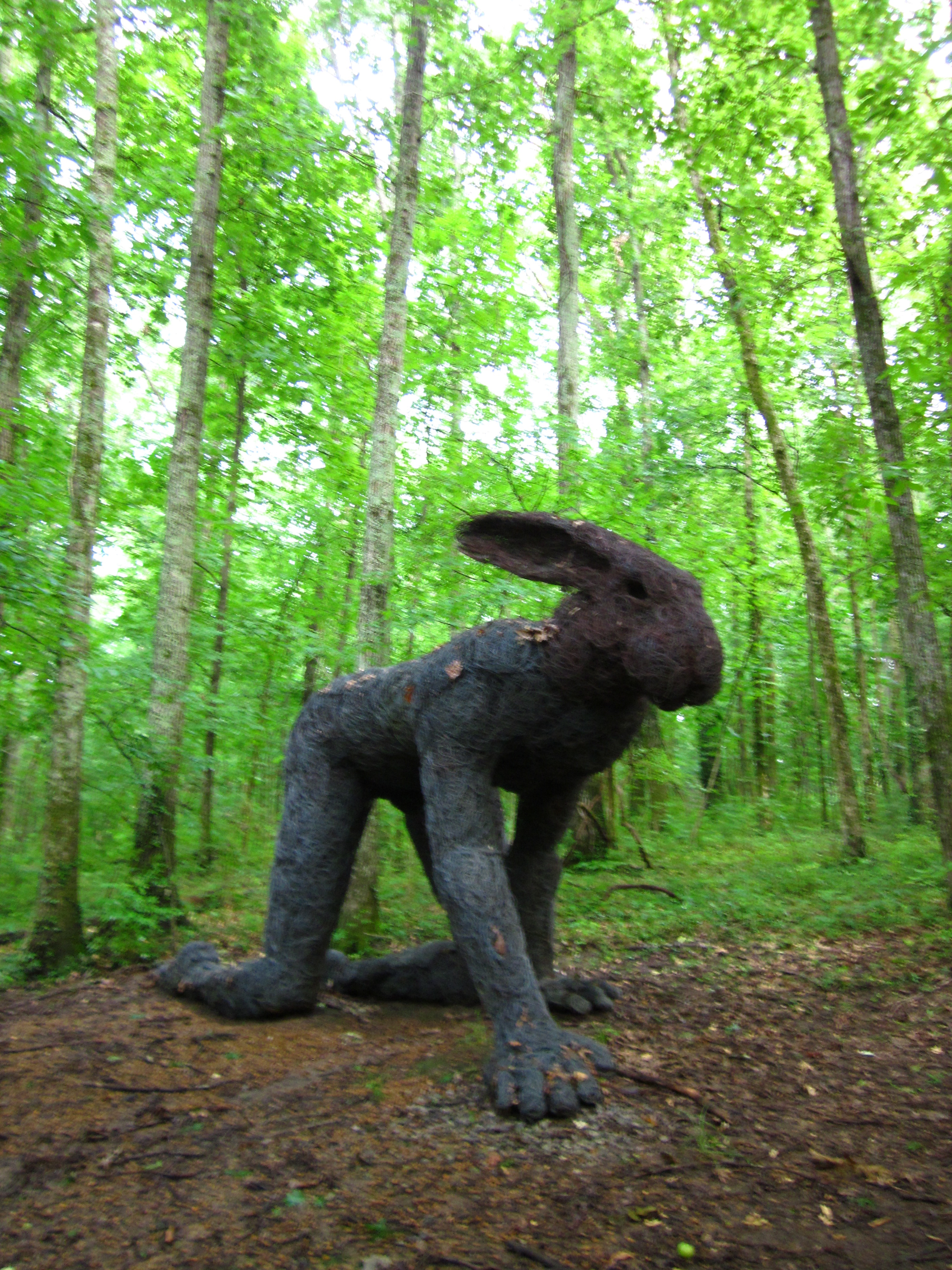
"Crawling Lady Hare" in Cheekwood's
Carell Woodland Sculpture Trail
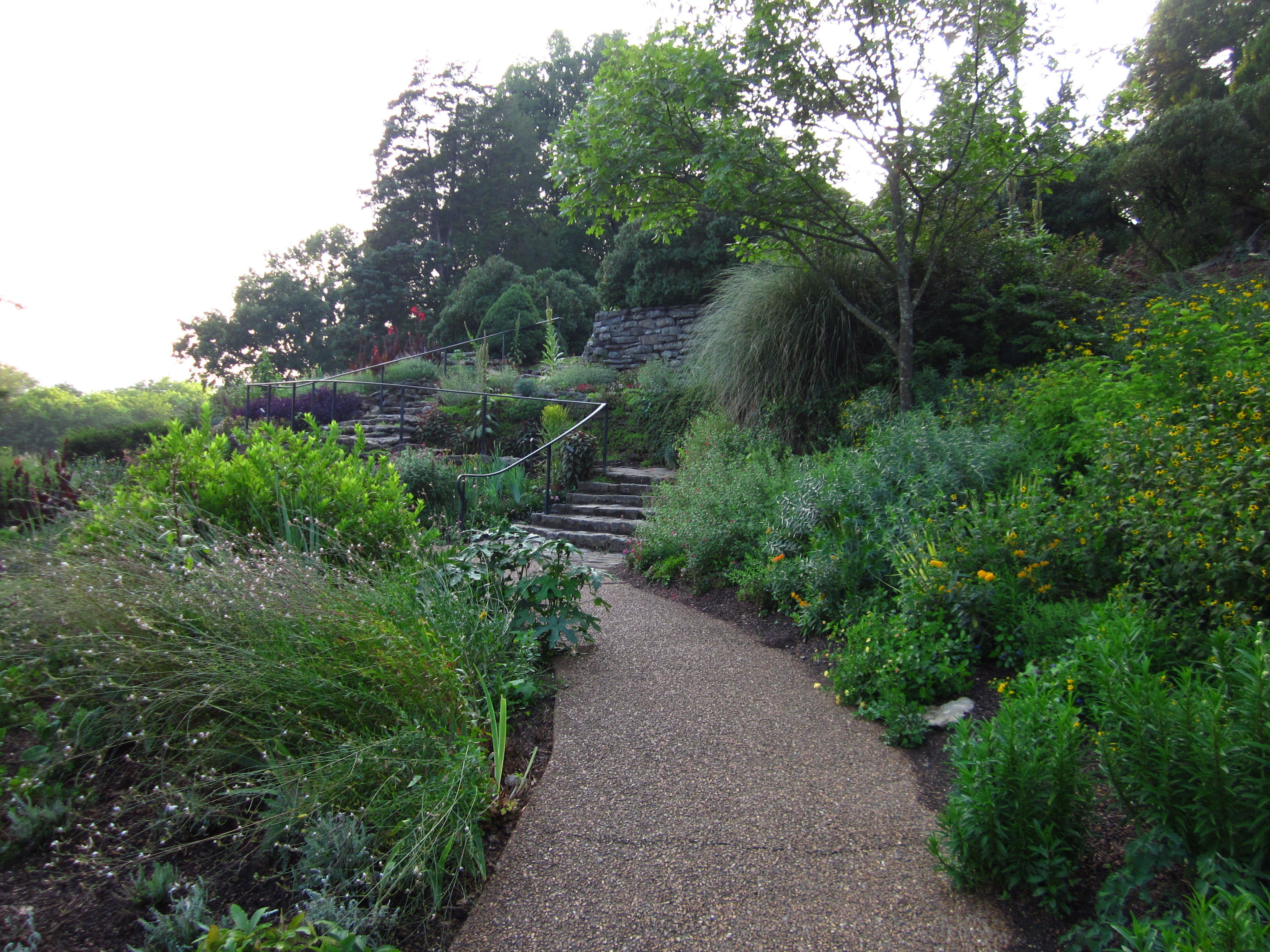
That said, you don't need a special event to visit Cheekwood.  The phenomenal gardens are brimming with life and color year round, and there's always something to see in the Museum of Art or Frist Learning Center and Contemporary Art Galleries.  I especially enjoyed walking through the Burr Terrace Garden.  The use of layering with contrasting colors, textures and shapes was really refreshing. If you're up for a hike, the Carell Woodland Sculpture Trail is full of art and wildlife.  In addition to exploring some pretty interesting displays, I crossed paths with a rabbit, turtle, two wood chucks and two deer.

Cheekwood also has plenty to keep young visitors entertained.  From the Walden Treehouse to the Trains! model train exhibit featuring Thomas the Tank Engine and friends, there is lots for the wee ones to do outdoors.  The Frist Learning Center often includes interactive art opportunities for visitors, and offers classes and camps to engage youth in the pursuit of art.

It would be remiss if I did not mention the fabulous Pineapple Room restaurant.  The Pineapple Room isn't your run of the mill garden restaurant aimed at satisfying visitor's appetites.  Many folks visit Cheekwood primarily to taste the garden gourmet.  You'll want to call ahead to make reservations to be sure you don't miss out.

Other important considerations when planning your visit:

  • Hours of operation:
    • Normally, Tuesday - Saturday 9:30 a.m. to 4:30 p.m., Sunday 11:00 a.m. to 4:30 p.m.
    • For the lights until November 10, Wednesday - Saturday 9:30 a.m. to 11:00 p.m.
    • Closed Mondays except Memorial Day and Labor Day.
    • Closed Thanksgiving, Christmas and New Year's Day.
  • Admission:
    Not all areas of the garden are wheelchair
    accessible.  Check the accessibility map for
    more information to help you plan your visit
    • Adults: $12
    • Seniors: $10
    • College Students (with ID) and Youth: $5
    • Children under 2: Free
    • Military personnel save 50% with a current ID.
    • Bruce Munro LIGHT Nights: An additional $3 after 4:30 p.m.
  • Parking: $3
  • Accessibility:
    • As a historic site, many of the garden paths are not easily accessible for wheelchairs, walkers, and strollers.  However, there are very accessible and easy to navigate paths throughout many areas where visitors can experience the most of the garden.  An accessibility map is available to help you plan your visit.
    • Shuttle transportation is available on request at any Cheekwood building.
  • Pets: Restricted to service animals only.
  • Cheekwood's "Helpful Hints" for visitors for available to review.
Special thanks to my cohort Chris for keeping me company at the light show and putting up with my incessant photography.

To see more photos of my visit to the Cheekwood Botanical Garden and Museum, check out my flickr set.

If you have any questions, ideas or suggestions, leave a comment or shoot me an email.

When is the last time that you visited a botanical garden?  What was your favorite feature?

When is the last time you visited the Cheekwood Botanical Garden?  How was your experience?

20,000 glass spheres light a dazzling display the field between Cheekwood's East Gardens and Museum of Art
Cheekwood's perennial garden is especially stunning at sunset.
I explore Cheekwood before Bruce Munro's LIGHT exhibit

Saturday, June 29, 2013

My time (so far) with "Every Child Outdoors" Knoxville

Youngsters learn where their fruits and veggies come from
at the ECO Garden.  Photo by Wendy Prothro-Howard.
Since September of 2011, I have been blessed with the opportunity to work with the wonderful organization "Every Child Outdoors" (Knoxville).  This particular project is funded through the Tennessee Department of Health "Project Diabetes".  The idea is that youth edible gardening will increase kids' knowledge of and affinity for fruits and veggies and encourage physical activity that will offset diabetes and obesity.

About the Project

The grant was awarded to the University of Tennessee's Human Dimensions Research Lab that specializes in survey research.  The HD Lab hired on a crew for the gardening project to write lessons that meet state standards, connect with schools, teach lessons and workshops, construct and maintain a garden, and administer questionnaires.

To fit with the mission of the grant, the project targeted the particularly high risk area of East Knoxville.    Local and national data suggests the residents are predominantly low socioeconomic status, and a great deal of the area's residents are overweight.  When I first joined on, I did a little digital exploration of the area.  A google map search for grocery stores in the area yielded only four results -- two of which I later discovered had closed, and one that doesn't carry produce.  (And yet, as of this year the area pictured will have two dialysis clinics!!)  Perhaps part of the reason East Knoxville is at such a high risk for diabetes is that residents live in something called a "food desert" where they don't have easy access to real foods.

Students learn through gardening at the Knoxville
Botanical Garden's ECO Youth Vegetable Garden.
As it would happen, the Knoxville Botanical Garden & Arboretum is located in the heart of East Knoxville.  KBGA graciously took us in and made their grounds a home for the ECO gardening crew.  Over the past two years, we've worked together to install a youth vegetable garden and fix up an adjacent abandoned building for programs.  Like-minded organizations in the area (especially Keep Knoxville Beautiful and Project Learning Tree) and literally dozens of volunteer groups got involved.  Together our groups were really able to move the needle on development of KBGA's new "Outdoor Explorer Classroom" area.  Today, what had been a somewhat desolate area of the property is a hotbed of activity for field trips, workshops, and visitors.

The gardens are located the epicenter for four of the area's schools.  Over the past two years, three of the schools have welcomed us in for school visits, field trips, "Gardening in the Classroom" teacher training sessions, and assistance in starting their very own school gardens.  In order to meet grant objectives, Austin-East High School signed on for 10 gardening labs specially designed for ecology and AP environmental science classes, and pretest/posttest surveys of garden lab participants and a control group.  

Students plant sunflower seeds in their school courtyard.
Photo by Wendy-Prothro Howard.
Out of all of the schools that we've worked with, Austin-East High School has a particularly special place in my heart.  It was the vision of one ecology teacher that got our entire program rolling in Knoxville.  Her heart and vision for her students led her to contact groups that could help her get started teaching gardening in her classroom.  The end result was the "Project Diabetes" grant being awarded to  UT's Human Dimensions lab to start the entire "Every Child Outdoors" program in Knoxville.  Wow, right?

What I've Learned

It would be pretty sad if I made it through two years of youth gardening without learning anything worth sharing.  Because my position was hort coordinator, I had more experience on the gardening side of the project.

  1. The whole "If you build it, they will come" mentality is wrong wrong wrong!  I'll reference this more in the next few points.
  2. Gardening in the Classroom: Simply building a garden on a school's property isn't going to
    Interest meetings, planning, and training are all important
    considerations when starting a school garden.
    immediately attract classes.  Posting a flier or making an announcement isn't going to do it either.  Having an interest meeting for teachers, students, parents, and the community is a step in the right direction, but still miles away from the destination.  Education and outreach is leaps and bounds more important to a successful gardening program than installation of the garden itself.  It's important to find or write lessons that meet state and common core standards for the grades and subjects taught in the school.  And you can't just give the teachers the lesson or teach the class yourself and expect that to open the magical doorway to gardening in the classroom.  You have to walk the teachers through how the lessons work, maybe teach a class yourself, and assist the teachers the first time they teach the lesson.  Necessity for this stems from the other various pressing demands on teacher time and resources.  Level of involvement will vary based on a teacher's existing gardening knowledge and time availability.
  3. Keep it Growing: Instead of looking at a school garden as a blessing, many administrators view it as a curse.  If a parent or member of the community, a teacher (in specific situations -- more on this soon), or an outside organization wants to put in a garden, any seasoned administrator worth their salt is probably going to shoot the idea down the first time.  Why?  Students grow up, move schools, and their parents go with them.  Members of the community move.  Older teachers retire, and new teachers tend to leave after a couple years.  Outside organizations get new projects that take precedence or lose funding.  With nobody left to maintain it, the site becomes what I like to call a Ghost Garden (scary, right?) .  Ghost gardens are empty, overgrown, abandoned eyesores, and should be avoided at all costs.
  4. Administrator Advice:  If any administrators happen to be reading this, I would recommend requiring these five things prior to approving the installation of a garden on your school's soil: 10 garden lessons that meet state and common core standards for multiple grades and subjects taught in your school, a list of teachers that are interested in using the garden for classes, a detailed monthly maintenance plan, a list of parties that are interested in maintenance, and a rough garden design that includes the size of the garden (smaller is better the first year) and plans for water access.  If any parents, members of the community, teachers, or outside organizations who want to start a school garden are reading this, don't fret.  If you want your garden to be successful after you're gone, you need to put together these five things anyway.
  5. When is a Garden a Community Garden?  My criticism of the "if you build it..." mentality also applies to community gardening, but that's a topic for a different day.  There are gardens that service communities (like school gardens), and there are bona fide true blue community gardens that are built by and for members of the community.  I've never worked with community garden project, so I can't really claim to have any experience in this area.  I have noticed a handful of "community gardens" that have failed in my area, and developed an opinion on the matter.  Eleanor Scott wrote an interesting piece that touches on this in the Metro Pulse last year - "Gardens with a Mission" - that would be worth a read if you have some time.
  6. You Can't Be Everything to Everyone:  Although my primary role was in the garden, I was also involved with teaching kids about gardening, leading field trips, teaching workshops, evaluation, and even writing the occasional lesson plan.  When you work with a small group on a broad project, it is easy to spread yourself too thin.  Don't be afraid to delegate.  It helps to keep your project mission, objectives, and job description in mind when you've got a lot going on.  
  7. Many Hands Make Light Work: The project's school liaison is fond of this saying, and it's grown on me over the years.  A chore can be easier and completed faster if you get help from coworkers and volunteers.  There is no way that we could have built our gardens without help.  You can make something big and beautiful if you're not too proud to ask for a little help.  There are sure to be lots of people and organizations that would love to be involved, even in a small way, with your garden.
  8. The Wind does not Break a Tree that Bends:  Life happens and circumstances may change.  A teacher or parent that's supposed to maintain your garden may move.  Less than half of the teachers that said they were interested in helping the garden may actually get involved.  Plants may die (multiple times).  A lot of the time what seems like calamity at first is actually the opportunity to make positive changes to the project.  Stick with your mission, but don't be afraid of change.
    Girl scouts get their hands dirty with some garden-themed
    volunteer work.  Photo from Wendy-Prothro Howard.
  9. Kids Come First:  This is the last point to make an impact, but it belongs at the top of the list.  Don't get so bogged down in the knitty gritty of the project that you lose sight of the mission.  Remember the kids when you're making the design or writing the lessons.  Leave room for whimsy.  I absolutely hate when a garden lesson is rigid.  You're not in the classroom -- you're outside!  So what if you're supposed to be learning about floral anatomy, and the kids are completely distracted by butterflies?  Butterflies are a part of floral anatomy too!  A healthy garden is about more than just the plants -- it's an entire ecosystem that's full of weird and interesting life-forms.  What's more is that most of the distractions can be tied to state and common core standards (if not the same exact standards) that you were trying to meet in the first place.   For some of the students, this may be their only chance to be outdoors for a while.  So let the kids enjoy being outside!

Next on the Horizon

Thank you to my lovely coworkers for helping me grow
professionally and personally.  I've had a blast so far!
At the end of this month, the project draws to a close.  The new grant will pick up in August, which leaves the garden crew with a month hiatus.  Although I will be checking on the garden through July (what kind of a monster would abandon a vegetable garden in the heat of summer?), I hope to have more time to read, write, plant, explore, and construct.  Be sure to check in to "Plante on Plants" for posts about some fantastic new plants and old favorites, "Thrifty Gardener" for step-by-step instructions on how to create some fun projects to spice up the home and garden, and "Garden Guide" for reviews of the fabulous gardens that I plan to visit this summer.  

Thanks for reading and keep growing!

To see more photos of the "Every Child Outdoors" youth gardening project, check out our Facebook photo albums.

If you have any questions comments, ideas, or suggestions, feel free to post a comment or shoot me an email.

What are your experiences with youth gardening?  School gardening?  What have you learned from the experience?


To learn more about the ECO program and to see some kids in action, skip ahead to 9 minutes and 30 seconds in this "Live Green Tennessee" video.  (They accidentally switched my and my coworker's name and title in this video.)


With some thoughtful planning and a whole lot of help from coworkers, like-minded organizations, and volunteers our site was transformed from an abandoned area to a verdant vegetable garden in less than one year.

Sunday, January 6, 2013

Tower Hill Botanic Garden, truly a horticultural treasure trove

Visitors explore Tower Hill Botanic Garden.
If you're anything like me, winter is the time of year you plan trips and garden excursions for the new year.  If your travels take you anywhere near Boylson, Massachusetts, be sure to stop by Tower Hill Botanic Garden.

Located just an hour outside of Boston, Tower Hill is the 132 acre home of the Westchester County Horticultural Society.  The botanic garden was founded by the Westchester County Horticultural Society in 1986 in order to meet the society's goal of serving as an "educational organization for the purpose of advancing the science and encouraging and improving the practice of horticulture."

Last summer I had the opportunity to visit Tower Hill as a part of the Perennial Plant Association's annual symposium.  Although we were a large group, walking the grounds was anything but claustrophobic.  It was refreshing to be able to take a leisurely stroll without bumping shoulders or feeling in the way of other visitors.

View of the Systematic Garden
from the Orangerie.
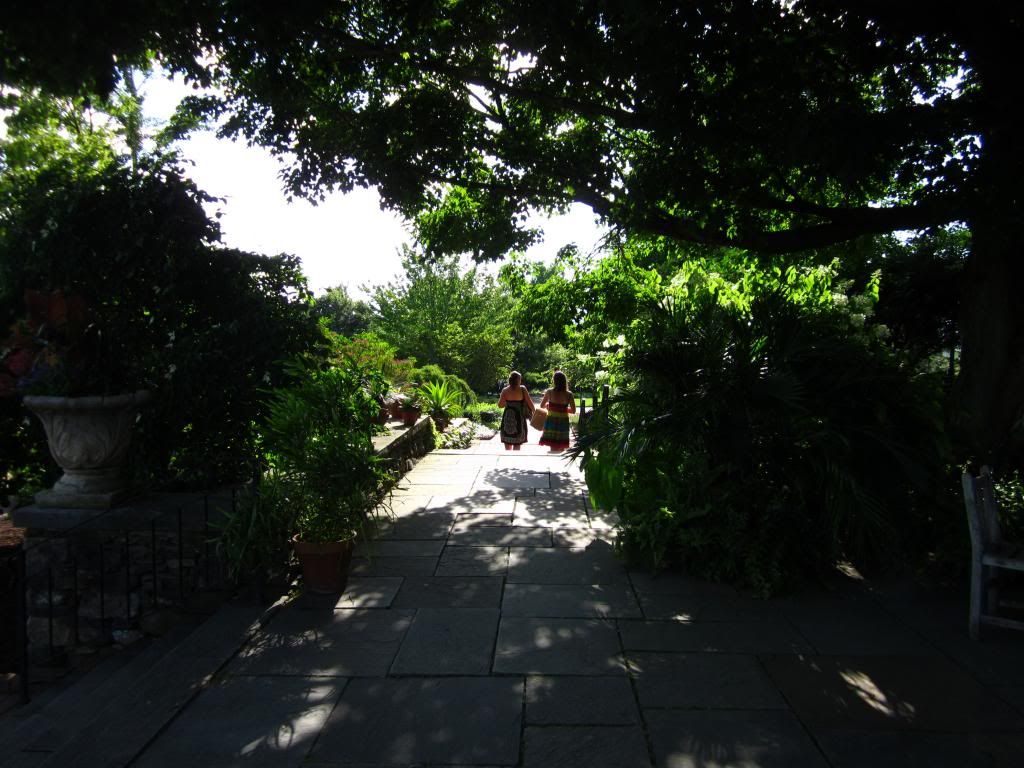
A few displays that I especially enjoyed were the Systematic Garden, the Secret Garden, and the Orangerie.  The Systematic Garden had a very formal, symmetrical design.  The plants are grouped not by size, color, or genus, but rather by evolutionary relationships.  There was an excellent vista near the center of the Systemic Garden.

The Secret Garden was actually located very close to the parking lot.  The tall trees and closely planted shrubs around the border made the area seem very secluded.  Although one would expect cool tones like grays, blues, and silvers to be prominent in a secretive area, the Secret Garden was splashed with chartreuse, magenta, and the bold foliage of red leaf bananas.  This seemed like the perfect spot to relax on one of the benches with a good book.

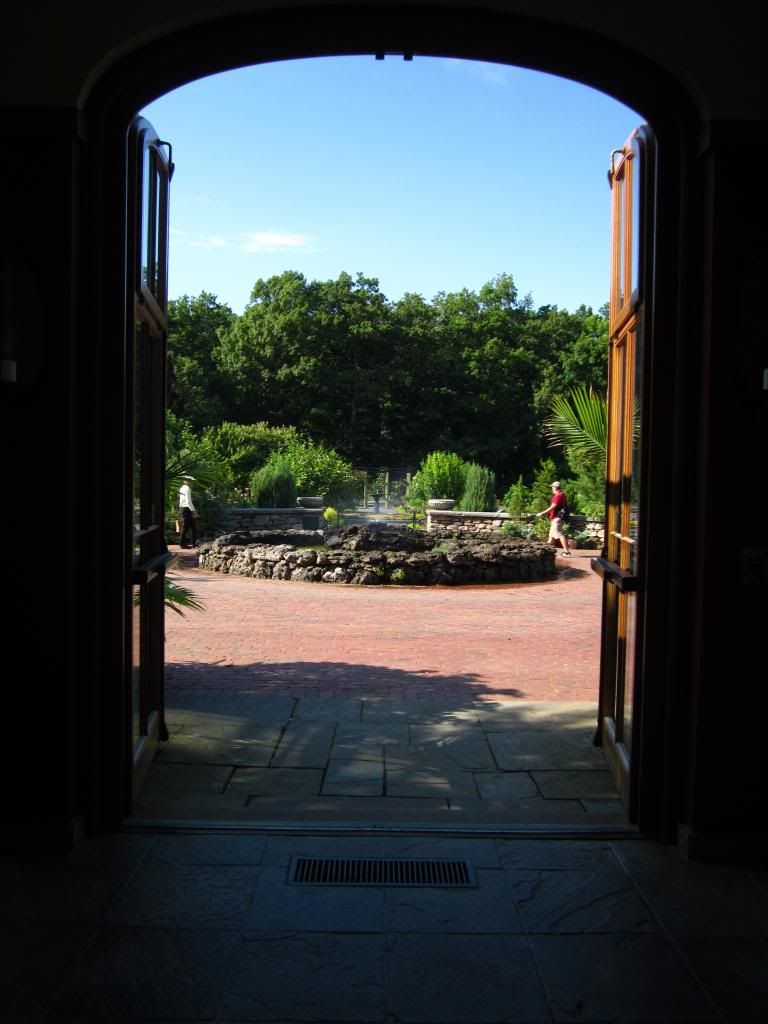
I've always felt something magical about conservatories, and the Orangerie was no different.  Large, lovely specimens of tropical plants crowded together, harmoniously soaking sunlight through glass walls.  A latin inscription was chiseled in the lintel above the Orangerie's doorway: "Si caelvm in terra sit haec id est laetittia aeterna."  My latin isn't what it used to be, so I used Google to find the translation.  According to another Tower Hill review, it means "If there be heaven on earth, this would be it.  Joy everlasting."

Turtle fountains grace the entrance to
the Orangerie at Tower Hill.

Other areas you shouldn't miss include the Inner Park, Wildlife Garden, Cottage and Vegetable Gardens.  There is a Farm School Youth Garden area, but the area didn't have much self-guided value at the time of my visit.  After romping around the garden, stop by Twig's Cafe (open 11 a.m. to 3 p.m.) to relax and reflect on your trip.

Other important considerations when planning your trip:

  • Hours of operation: 9 a.m. to 5 p.m. Tuesday through Sunday
  • Admission:
    • Adults $12
    • Seniors $9
    • Youth (6-18): $7
    • Members and children under 6: Free
    • Click HERE for $2 off regular admission.
  • Accessibility:
    • Limited to Stoddard Education and Visitor's Center, Lawn and Secret Gardens.
    • Wheelchairs available at the Information Center.
    • Special parking available on Allee Drive.
  • Pets:
    • Restricted to service animals only.
  • Tower Hill's guide to Garden Etiquette is available for review.
To see more photos of my visit to Tower Hill Botanic Garden, check out my photobucket story.

If you have any questions, ideas, or suggestions, leave a comment or shoot me an email.

What was your experience when visiting Tower Hill Botanic Garden?  What features are important to you when planning horticultural excursions?

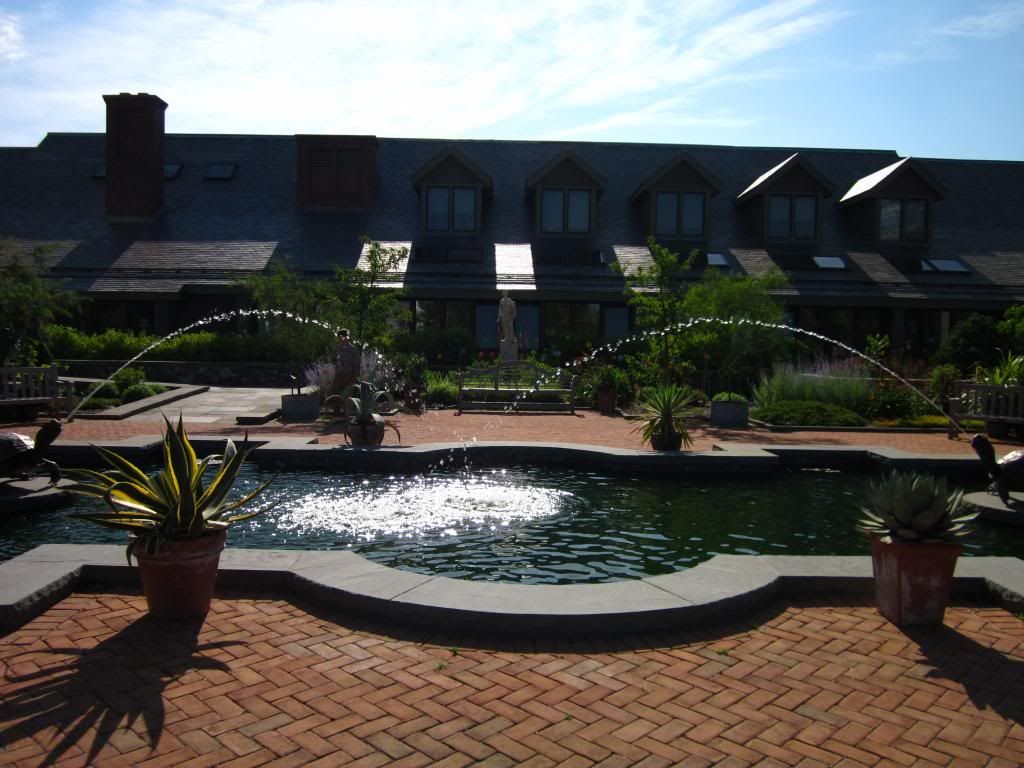
Fountain in the courtyard by the Stoddard Education and Visitor's Center and the Orangerie.


I strike a pose in the Systematic Garden at Tower Hill.

Sunday, December 9, 2012

Horticulture for the Holidays: Spotlight on the U.S. Botanic Garden

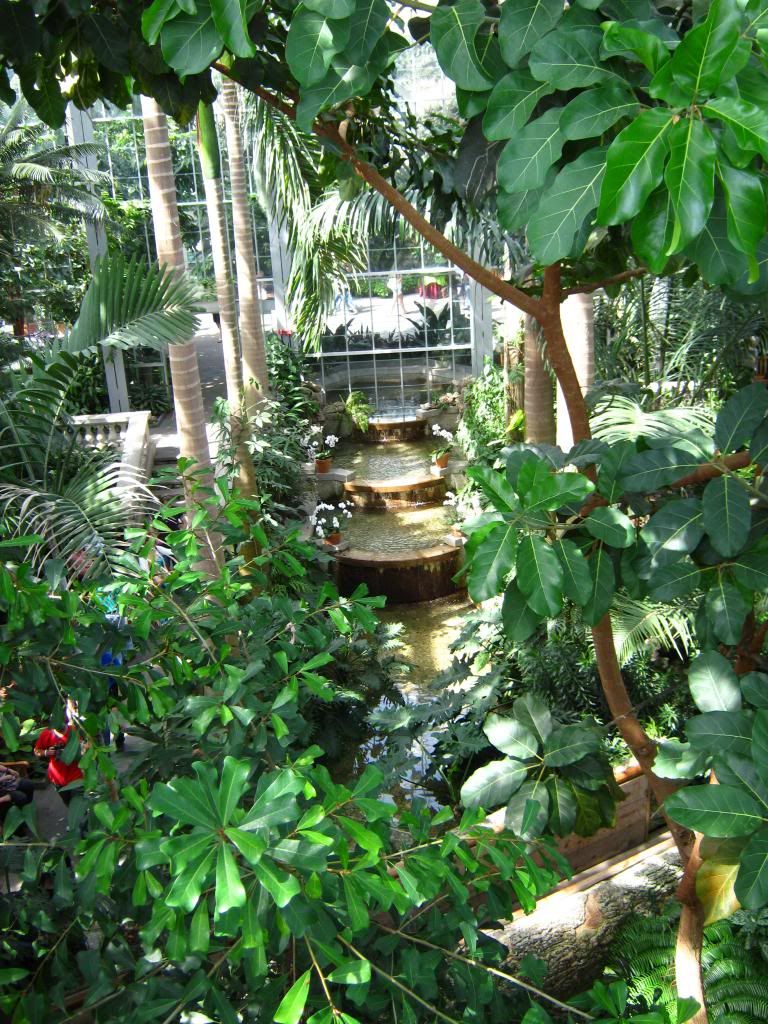
The U.S. Botanic Garden's conservatory is
a tropical escape from D.C.'s winter weather
For many families, the holiday season is the time to reconnect with loved ones. Some families will traverse the miles to gather at the home of a loved one. Others may take a family vacation and experience someplace new together.

 However you celebrate the holidays, I encourage you to visit a public garden in the area. Many public gardens have holiday activities and displays from tours and workshops to Christmas lights and trains. 

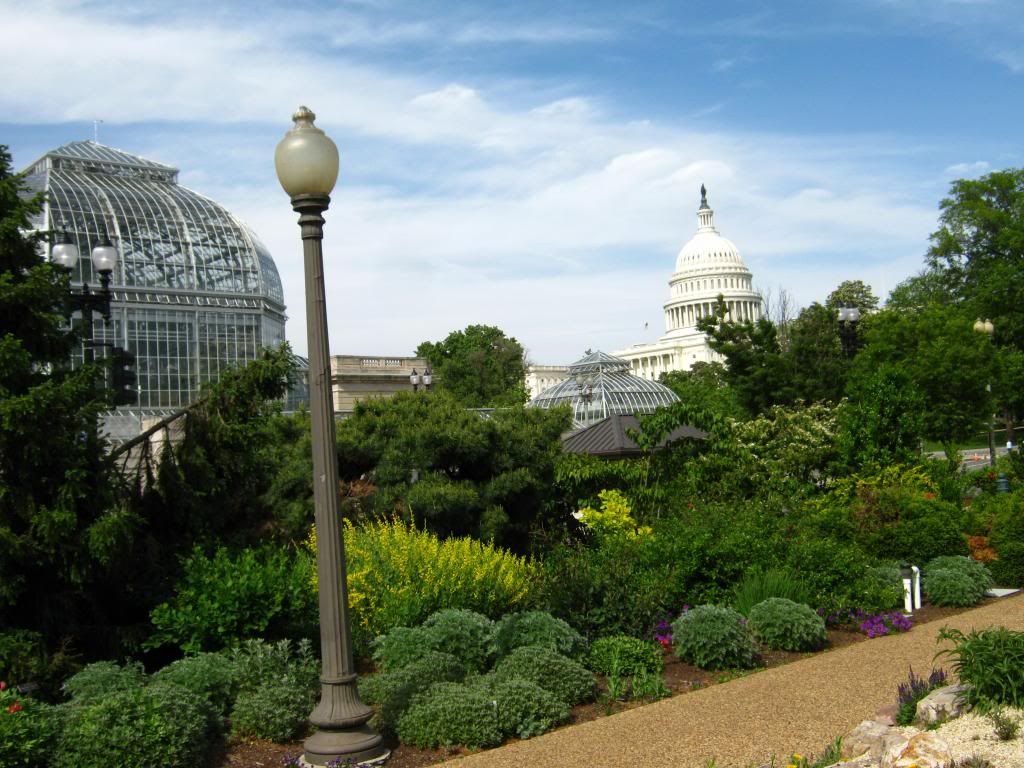
Last Christmas, I traveled to our nation's capital - Washington D.C. - to take in the sights and to re-visit the United States Botanic Garden.  The garden is tucked away near the Capitol building on the National Mall.  The U.S. Botanic Garden's website states that their mission is "to demonstrate the aesthetic, cultural, economic, therapeutic and ecological importance of plants to the well-being of humankind."

 The conservatory is spectacular at any time of year, with exhibits like the garden court, that features plants that are used in products from food to cosmetics.  Although I prefer to visit the garden during warmer months, it's still worthwhile to peruse exhibits like the rose garden at any time of year.
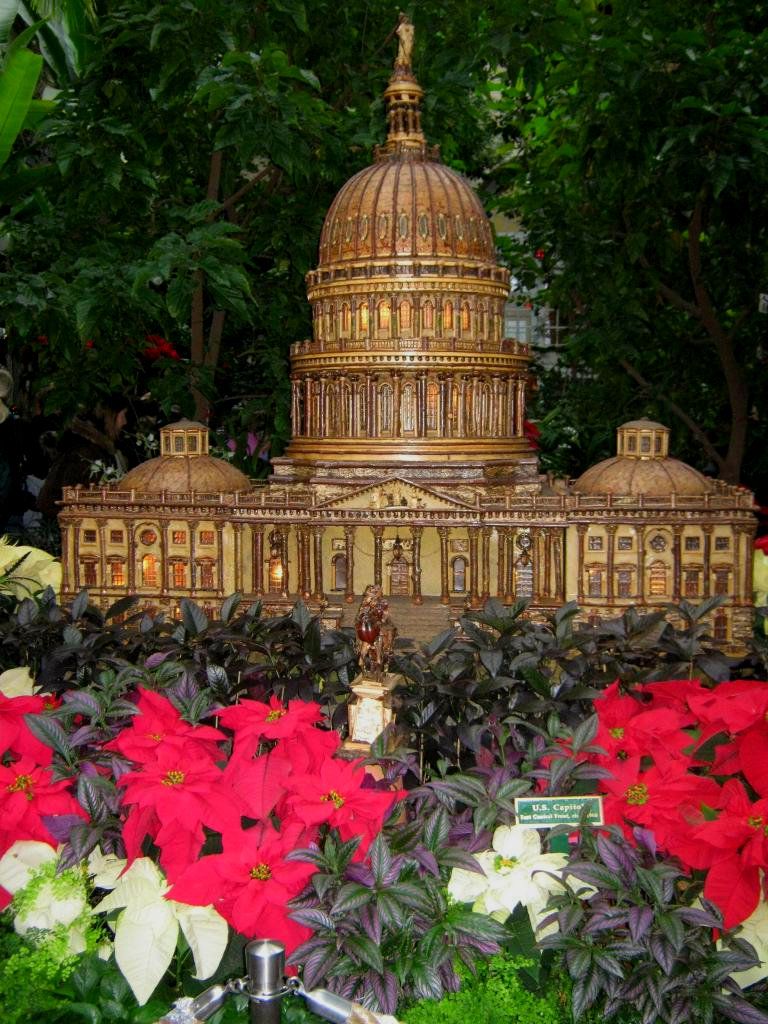
This plant based model of the capitol is part of
the USBG holiday exhibit "Seasons Greenings"

The U.S. Botanic Garden celebrates the holidays with a "Seasons Greenings" exhibit that features a model of the capital, trains, fairy dwellings, and a display of a large collection of poinsettias.  In addition to festive displays, USBG will host live holiday music and workshops.

The holiday exhibit runs from November 22 to January 1st and the garden will be open for extended hours until 8:00 p.m.  As is true for the rest of the year, a holiday visit to the U.S. Botanic Garden is free to the public.

If "Season Greenings" 2012 is anything like last year, plan to wait in line for the model trains.  Although the conservatory was slightly crowded, there wasn't any wait to get into the garden or conservatory itself.

Whether you're able to visit the United States Botanic Garden or a public garden a little closer to home, consider making a garden trip part of your holiday traditions.  You'll be glad you did!

If you have any questions, ideas, or suggestions, please leave a comment or shoot me an email.

To see more photos of my trips to the United States Botanic Garden, check out my photobucket story.

To get more of Amanda, check out The Thrifty Gardener and Plante on Plants.

Have you ever visited the United States Botanic Garden?  What was your experience there?

Where is your favorite public garden holiday display?  Where else would you like to visit?


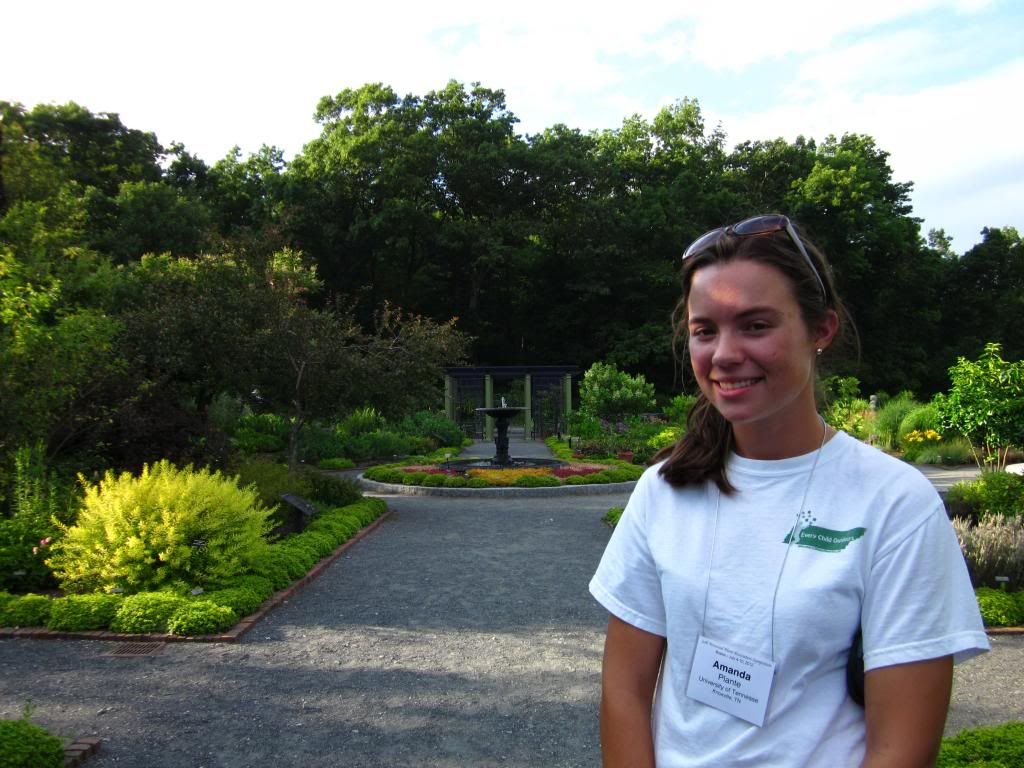
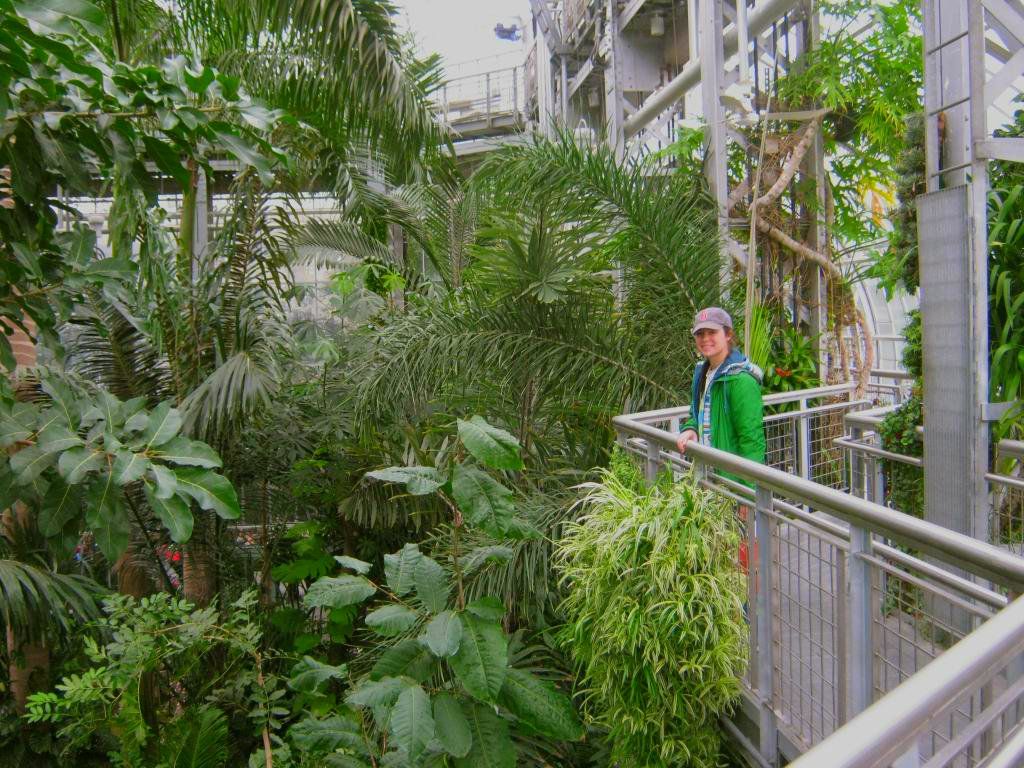
Me, enjoying our visit to the U.S. Botanic Garden's conservatory over the holidays in 2011


Located on the mall at Washington D.C., the United States Botanic Garden is lovely to visit any time of year.

Friday, December 9, 2011

Beautiful Bellingrath Gardens


By now, virtually everybody in America has seen the Gulf tourism promotional videos put out by BP. Representatives of restaurants, beaches, and other attractions from Gulf States appear and make a case for vacationing there. One of the attractions that may not have been as recognizable to viewers was Bellingrath Gardens in Mobile, AL. In the spring of 2010, I had the opportunity to visit Bellingrath and interview director Dr. Bill Barrick. I had a great time at the gardens, and hope that you will learn about the gardens from my experience.
Bellingrath Gardens is located at the estate of the historic home of Mr. and Mrs. Bellingrath in Mobile, Alabama. These gardens first opened to the public in 1934, and its current mission is to preserve the legacy of their founders and enhance the estate landscape. The current gardens director Dr. Bill Barrick executes Bellingrath Gardens’ mission. Dr. Barrick’s educational background is grounded in plant sciences – he has a bachelor’s degree in botany, a master’s in horticulture, and a doctorate in landscape architecture.
One of the goals of Bellingrath Gardens is to provide a display of plants that are signatures of the landscapes in the Deep South. The spring azalea display is one of the main draws to the gardens – the number and variety of azaleas existing in the gardens is amazing. If you’re an azalea fan, you need to plan a trip to Bellingrath this spring! Although Bellingrath Gardens has an extensive azalea collection, they to not have any certified plant collections. Throughout the entire gardens, I only observed one plant that had a label.
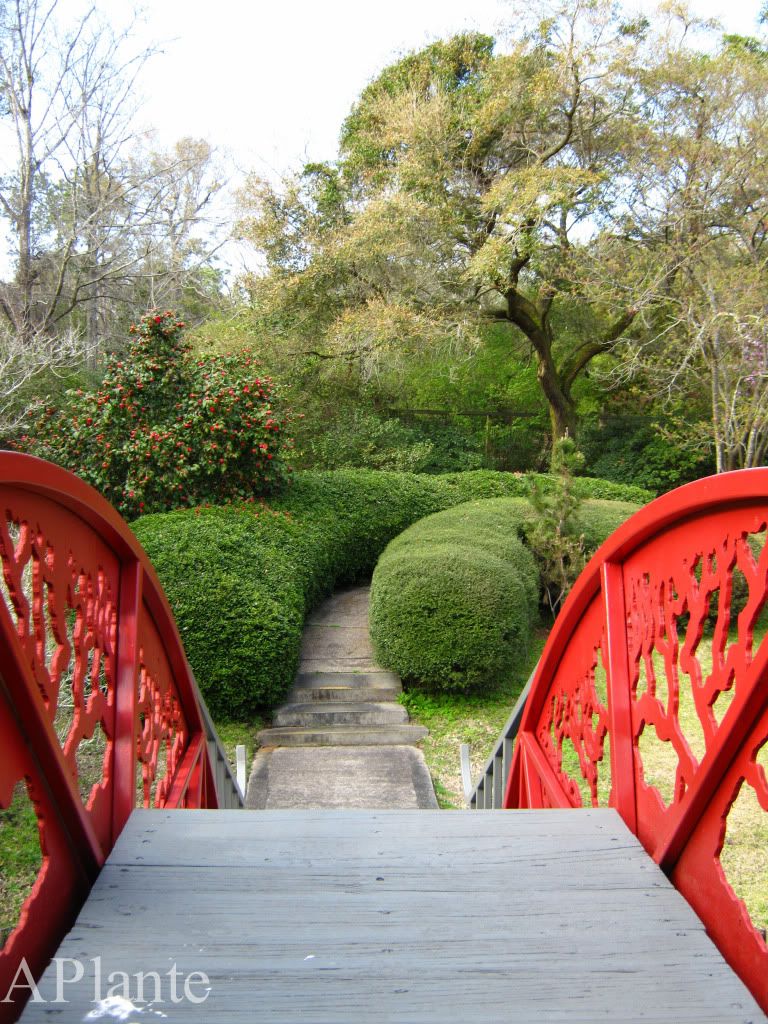
If you’re looking for year round interest, Bellingrath has more than just azaleas. Around the house is an absolutely stunning garden full of fountains. The Bayou Riverwalk is a great area to relax and observe the natural landscape. Probably my favorite spot in Bellingrath was their Asian American garden. The tranquility and beauty of the garden tempted me to remain there the rest of the day.
If you like to plan your visits based on seasonal events, Bellingrath has more than just spring azaleas. Following the spring flowers, Bellingrath’s second biggest event is their holiday light show “Magic Christmas in Lights”. In order to draw visitors to the gardens throughout the year, Bellingrath’s schedule includes many workshops, booksignings, a flower festival, and even car shows.
The gardens are committed to environmental education and offer a variety of educational workshops to children and adults. Though their mission is not educational, it lends itself easily to establishing an educational message.  A great deal of the garden is formal and cultured, however, the Bayou Riverwalk was aside to educate visitors about native plants, animals, and the ecosystem. In addition to environmental education, Bellingrath Gardens offers weekly classes to the community.
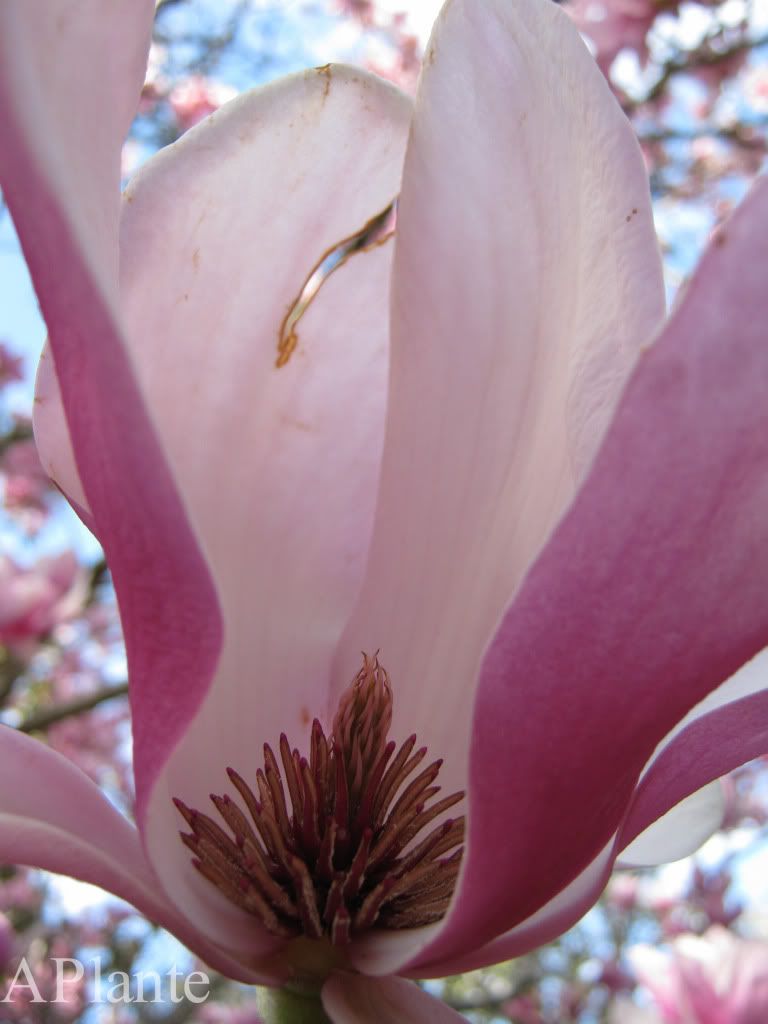
The subtle smells of saucer magnolias planted periodically behind the high azalea hedges encouraged me to explore the landscape further by continuing down the walkway, and enticed me even further into the landscape despite the fact that the gardens signature azaleas were not yet in bloom. There was an effective use of color in the landscape, which played off the mystery of curving paths and high hedges. The sound of water was an especially effective design element around the Bellengrath home. There were many garden rooms to explore, and without the sound of trickling water from fountains I would probably not have happened upon a few of the garden rooms. I am not sure if mystery was an intentional element of this landscape, but it was present in all of the garden zones and rooms. Even by the home where there was a more formal style, the raised hedges piqued my curiosity as to what was on the other side.
I am not too proud to admit that I did get lost on this visit. Very lost. I got so turned around that I almost missed my interview with Dr. Barrick. When I had purchased my ticket, I had picked up a brochure and headed out, assuming that there would be a map inside the brochure. Later when I realized that I was lost, I found (to my dismay) that the brochure did not contain a map. The maps were actually located in the gift shop, in the building right next to where tickets can be purchased. If it would not detract from the beauty of the gardens too much, my recommendation would be that a few large maps be posted for wanderers such as I.
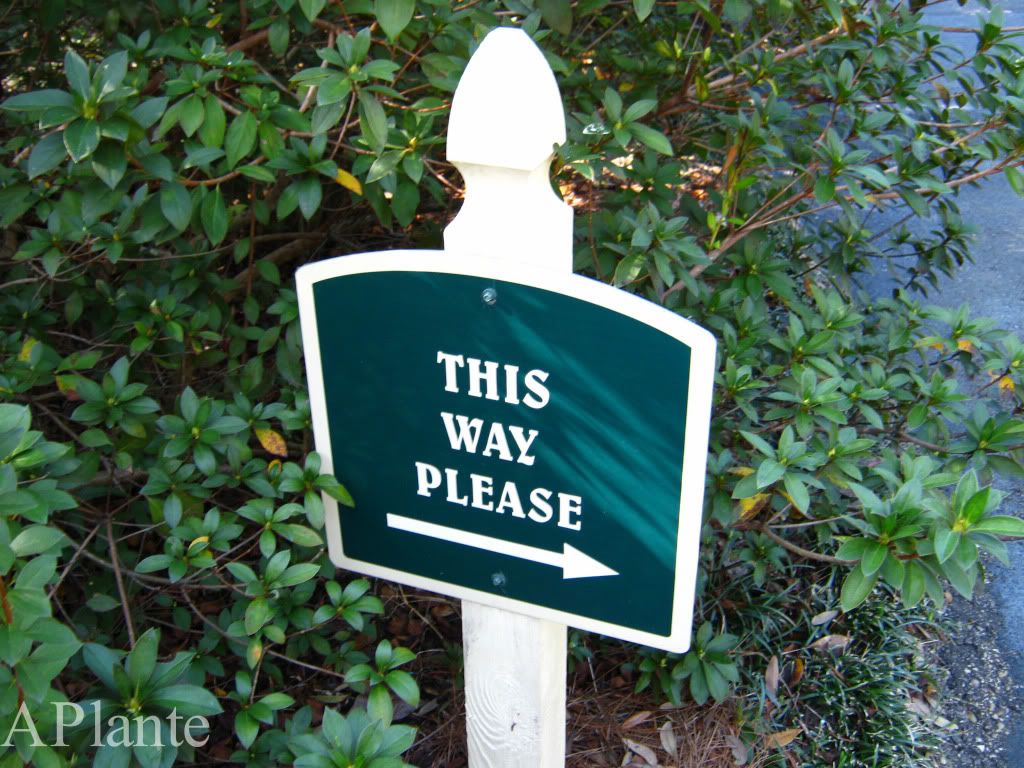
Aside from Dr. Barrick, the only Bellingrath Gardens employees I came into contact with were on the telephone when I scheduled my appointment, at the welcome center where I bought my ticket, and in the gift shop where I was to meet with Dr. Barrick. All the employees were extremely polite and everybody was wearing a smile. Within the gardens, there were several courteous signs, and each of them used the word “please”. If that isn’t southern hospitality, I don’t know what is!
The plant material was in fantastic shape, though only one Bellingrath Gardens employee has any professional training in horticulture, . I did not observe any dead or diseased plants on the entire property, and only one specimen had observable insect problems. The grass was all mowed and the fountains were all very clean. I did not find any garden employees at work during my visit, but it was evident that they had been there recently.
It was obvious that safety was a priority within the gardens. Safety cones were placed where there was standing water or loose bricks. Many of the steps were marked with bright yellow edges, and there were safety railings virtually throughout the gardens. There was some standing water in areas of a marble path by the historic residence that may have been slippery, and there were orange traffic cones strategically placed around the standing water to inform visitors of the potential hazard. The day before my visit there had been a rainstorm, and this made areas that had stone steps and paths a bit slippery. The thing to remember is that the gardens make it a point to go out and mark potentially dangerous areas.
Most areas of the gardens are ADA accessible, with six foot wide paved paths. In my interview with Dr. Barrick, I asked about the garden’s plans for increasing ADA accessibility for the handful of areas around the gardens that may be difficult for a person in a wheelchair or walker to maneuver. The director was honest: while ADA accessibility is an important aspect for visitors, updating exisitng structures in and around the historic residence would conflict with the gardens mission of preservation. All new and updated displays are compliant with ADA rules, but unfortunately the lovely home and garden may be difficult for a physically disadvantaged person to experience. If you are a garden enthusiast who is restricted to a wheelchair or walker, please don’t let this information dissaude you from visitng Bellingrath. The gardens cover a very large area that has a wide variety of displays. When you visit the gardens you will certainly have plenty of interesting areas to visit. If you have limited mobility but do not have your own wheelchair, the gardens rent out wheelchairs in the front entrance for only $5.00.
If you’re a garden enthusiast who has pets, it’s worth mentioning that Bellingrath does not allow dogs on the property. If you are traveling with pets, the gardens do have a “Pet Motel” where you can leave your dogs in an enclosed area while you enjoy the gardens.
I immensely enjoyed my trip to Bellingrath gardens. There was plenty of material to pique my interest. The gardens were well maintained with no dead or diseased plants worth noting, and members of the staff who crossed my path were extremely helpful and friendly. In addition to being a beautiful garden, Bellingrath used its appeal to teach visitors about ecosystems and the native environment. I walked away from Bellingrath Gardens with the impression that it was a place of beauty maintained with a polite and caring attitude. For only $12.00 to visit the gardens ($6.50 ages 5-12), I felt that it was well spent on an afternoon of wonder. If you’re looking for history, beauty, plants, and good old-fashioned Southern Hospitality, Bellingrath Gardens just can’t be beat!
Special thanks to Dr. Bill Barrick for meeting with me to answer my questions, and Mrs. Wendy Prothro Howard for proof reading this post! 
For more information about Bellingrath Gardens, their website can be found at: http://www.bellingrath.org/

To see more of my photos from my visit, check out my photobucket account at: http://photobucket.com/aplantebellingrathgardens 

If you have any questions, comments, ideas or suggestions, I love to get email!

For more information about me, Amanda Plante, check me out at:
Monday, December 5, 2011

Hello, and welcome to A.Plante’s Garden Review!

As a horticulturalist, I have had the opportunity to visit gardens across the country. The goal of this blog is simple: to educate readers about horticultural institutions I’ve visited. In addition to reviewing the state of the gardens themselves, I’ll also provide you with information about ADA accessibility, navigation, youth exhibits, pet admittance, and cost of admission. It isn’t my intent to write a novel about each garden (if that’s what you want, get me a book deal and we can talk). I just want my co-horts ( that’s you, my reader) to have a concise, informative resource for the next time you plan a trp to a garden.
Please feel free to email me with any comments, questions, and writing tips.
Thanks for bearing with me while I get the hang of blogging, and I’ll be seeing you later when we take a look at Alabama's Bellingrath Gardens!