Showing posts with label outdoor classroom. Show all posts

Friday, October 20, 2017

Plant-to-Plate Education at the Atlanta Botanical Garden


The Atlanta Botanical Garden has, hands down, the best cooking program of any botanic garden that I have visited.  So many gardens do a great job of showcasing and educating visitors about important food crops, but the Atlanta Botanical Gardens really shines in their plant-to-plate education. 

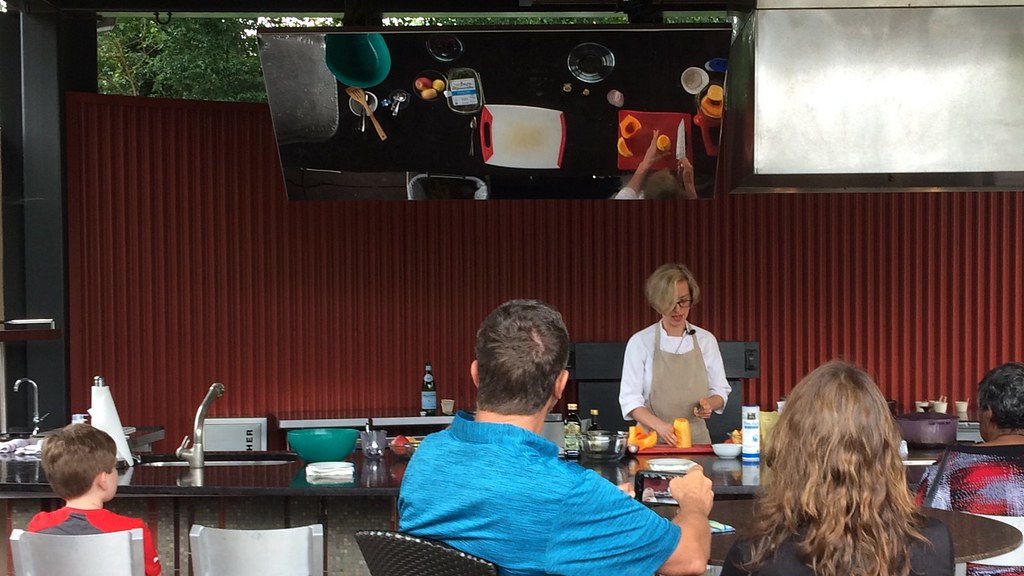
The Edible Outdoor Kitchen is clearly designed for visitor education.  The kitchen features an extensive island that includes a cooking range with plenty of counter space and a bar for visitors to get a close look at the demonstration.  There is a mirror above the island to allow all the class participants -- even the ones in the back row -- to get a good view of the chef at work. 
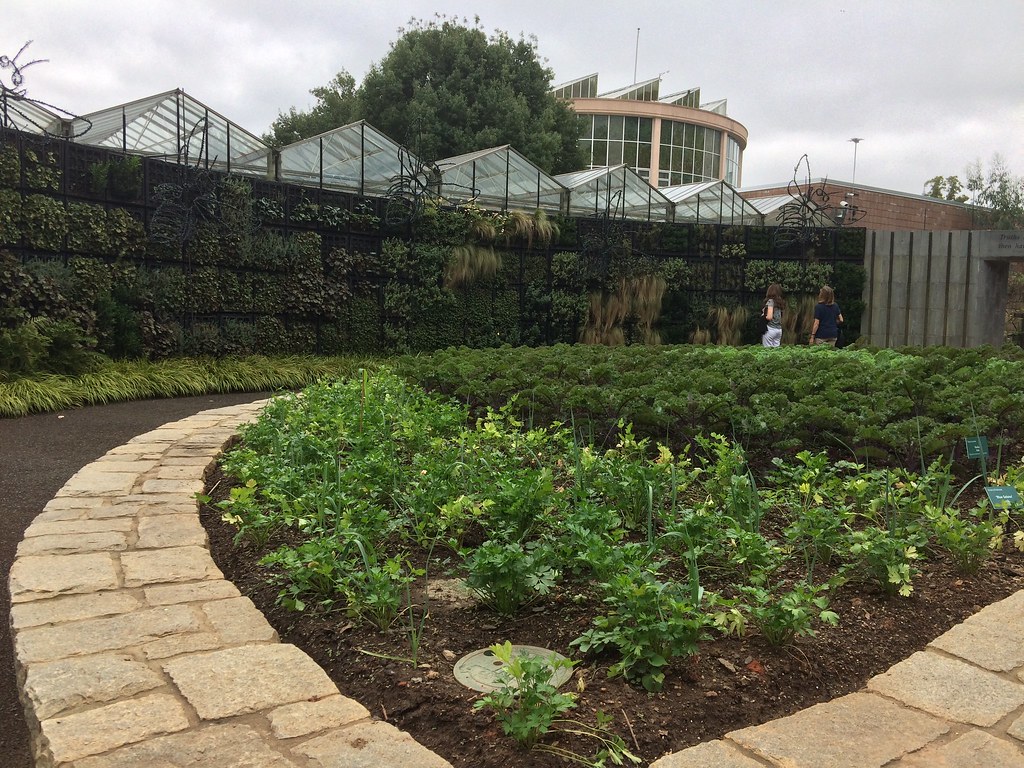
The Edible Garden at the Atlanta Botanical Garden
Visitors can observe the class from a bar next to the island, at several tables under a covered pavilion, or from benches in the back and to the side of the pavilion.  There's also plenty of standing room for folks to pause and listen for a few minutes on their stroll from the Edible Garden to the Fuqua Orchid Center.

The kitchen is located in the Atlanta Botanical Garden's Edible Garden.  The Edible Garden has impressive, large stonework raised beds that showcase plants at the visitor's eye level.  In the center of the first garden room is a water feature that, on past visits, has been used to grow rice.  The first backdrop to the garden are a variety of espalier fruit trees.  The second is an extensive living wall that has herbs and ornamental plants.  There are also formal in-ground plots and a berry patch.

Chef Julia LeRoy is a garden chef
at the Atlanta Botanical Garden
The Atlanta Botanical Garden offers three Garden Chef Demo classes every weekend, free with admission.  The Garden Chefs are tasked with demonstrating a seasonal recipe made with local ingredients for visitors.  In the class I attended, Chef Julia LeRoy prepared a butternut squash salad with seasonal greens, quinoa, onions, apples, roasted walnuts, and dried cranberries.

Class participants didn't simply learn how to prepare the dish -- Chef LeRoy encouraged visitors to consider alternatives to the recipe by asking questions like, "What are some other Georgia apples that are good for baking?"

If I had seen the finished product before attending the class, I might have thought to myself that it was too complicated for me to attempt.  But after Chef LeRoy walked us through the steps, it didn't seem so tricky.  She also gave some tips for alternatives that might be a little easier, like substituting rice for the quinoa or by purchasing roasted walnuts rather than roasting at home. 

The chef also discussed some of her philosophy on cuisine.  "I like to make healthy meals without putting too much thought into it.  I don't need to see the nutritional breakdown," she said, "I just want to enjoy it."  And that kind of gets to the heart of the Garden Chef Demo program.  The Atlanta Botanical Gardens offers these classes to help visitors make the connection that fruits and vegetables can be prepared simply to create delicious, healthy meals.
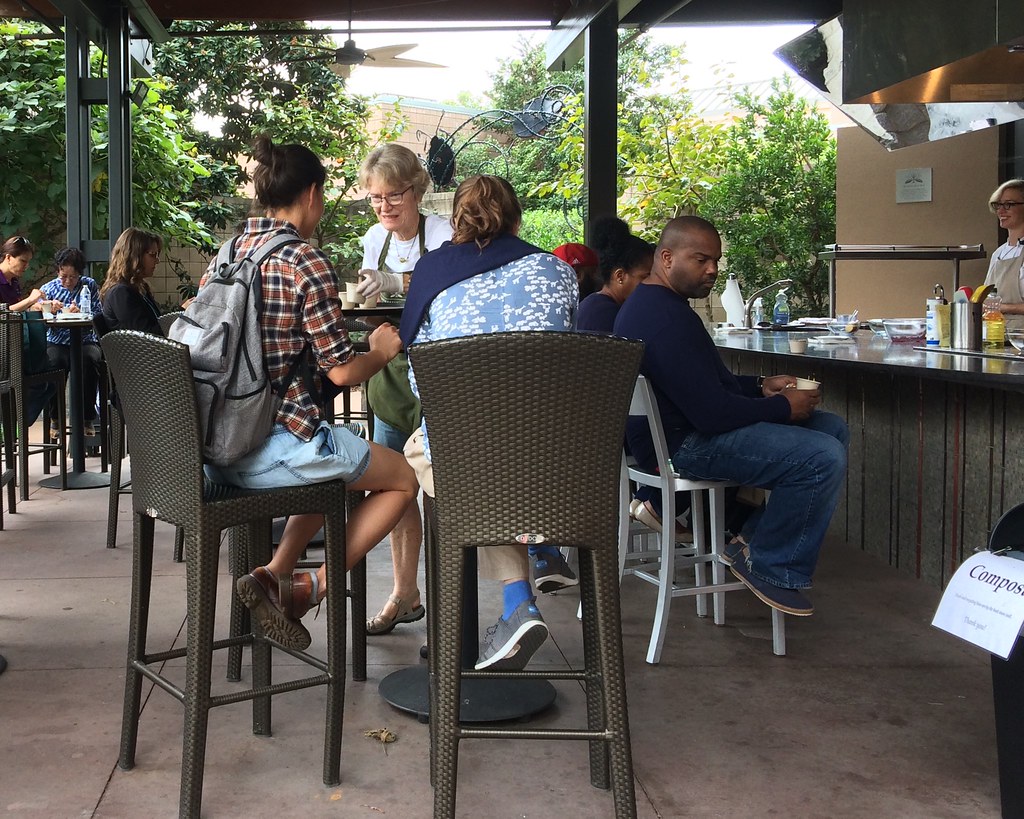
Outdoor Kitchen Assistant gives the class samples
I would imagine that these classes wouldn't be possible without a lot of help.  Two fantastic volunteers were on hand to help set up, greet visitors, assist the chef, serve class participants, and clean up after the class.  These outdoor kitchen assistants did a great job keeping things running smoothly.

In conclusion, if you happen to visit the Atlanta Botanical Garden on a weekend, consider setting aside roughly half an hour.to check out one of these classes.  I've visited a few times where I've been on kind of a tight schedule, and I always kicked myself afterwards for not allowing time to sit in on the class.  The Edible Outdoor Classroom is located at fair distance from the Hardin Visitor Center, Longleaf Restaurant, and other seating areas (besides garden benches), which makes it a good spot for visitors to take a break from exploring the gardens. 

If you only have time to pause for a moment rather than attend a full class, never fear.  The Atlanta Botanical Garden does post all of the class recipes online, so don't stress too much about missing out.  In addition to the recipes from the most recent classes, the website also seems to have the recipe for every dish that has been prepared in the Garden Chef Demos since 2010.  What a great resource!

Other important considerations when planning your trip:
  • Garden Chef Demos:
    • May - October, 12 p.m., 1 p.m. and 2 p.m. Saturdays and Sundays
  • Hours of operation:
    • April - October, 9 a.m. to 7 p.m. Tuesday through Sunday
    • November - March, 9 a.m. to 5 p.m. Tuesday through Sunday
    • Closed Mondays, Thanksgiving, Christmas, and New Years day
    Class participants get to sample the dish prepared
  • *Admission:
    • Adults: $21.95
    • Youth (3-12): $15.95
    • Members and children under 3: Free
  • Parking:
    • 0 - 30 minutes: Free
    • 31 - 60 minutes: $2
    • Additional 30 minutes: $1
    • Daily Maximum: $15
  • Accessibility:
    • Virtually the entire garden is accessible.  I did not note any areas that could not be reached by one way or another.
    • Wheelchairs available at the Visitors Center on a first come first serve basis.
    • Electric mobility scooters may be rented.
  • Pets:
    • Restricted to service animals only.
    • Dogs are allowed for the annual "Reindog Parade" event.
  • Atlanta Botanic's guide to Garden Etiquette is available for review.
*Are you a member of your local public garden?  Ask if membership includes participation in the American Horticulture Society's Reciprocal Admissions Program.  By supporting your local garden, you and one guest could visit the Atlanta Botanical Garden for free.

To see more photos of any of my visits to the Atlanta Botanic Garden, check out my flickr stream.
If you have any questions, ideas, or suggestions, leave a comment or shoot me an email.

 Does your local public garden or garden club offer culinary classes?  What are they like?

When is the last time you attended a cooking class?  What dish did you prepare? 


Saturday, June 29, 2013

My time (so far) with "Every Child Outdoors" Knoxville

Youngsters learn where their fruits and veggies come from
at the ECO Garden.  Photo by Wendy Prothro-Howard.
Since September of 2011, I have been blessed with the opportunity to work with the wonderful organization "Every Child Outdoors" (Knoxville).  This particular project is funded through the Tennessee Department of Health "Project Diabetes".  The idea is that youth edible gardening will increase kids' knowledge of and affinity for fruits and veggies and encourage physical activity that will offset diabetes and obesity.

About the Project

The grant was awarded to the University of Tennessee's Human Dimensions Research Lab that specializes in survey research.  The HD Lab hired on a crew for the gardening project to write lessons that meet state standards, connect with schools, teach lessons and workshops, construct and maintain a garden, and administer questionnaires.

To fit with the mission of the grant, the project targeted the particularly high risk area of East Knoxville.    Local and national data suggests the residents are predominantly low socioeconomic status, and a great deal of the area's residents are overweight.  When I first joined on, I did a little digital exploration of the area.  A google map search for grocery stores in the area yielded only four results -- two of which I later discovered had closed, and one that doesn't carry produce.  (And yet, as of this year the area pictured will have two dialysis clinics!!)  Perhaps part of the reason East Knoxville is at such a high risk for diabetes is that residents live in something called a "food desert" where they don't have easy access to real foods.

Students learn through gardening at the Knoxville
Botanical Garden's ECO Youth Vegetable Garden.
As it would happen, the Knoxville Botanical Garden & Arboretum is located in the heart of East Knoxville.  KBGA graciously took us in and made their grounds a home for the ECO gardening crew.  Over the past two years, we've worked together to install a youth vegetable garden and fix up an adjacent abandoned building for programs.  Like-minded organizations in the area (especially Keep Knoxville Beautiful and Project Learning Tree) and literally dozens of volunteer groups got involved.  Together our groups were really able to move the needle on development of KBGA's new "Outdoor Explorer Classroom" area.  Today, what had been a somewhat desolate area of the property is a hotbed of activity for field trips, workshops, and visitors.

The gardens are located the epicenter for four of the area's schools.  Over the past two years, three of the schools have welcomed us in for school visits, field trips, "Gardening in the Classroom" teacher training sessions, and assistance in starting their very own school gardens.  In order to meet grant objectives, Austin-East High School signed on for 10 gardening labs specially designed for ecology and AP environmental science classes, and pretest/posttest surveys of garden lab participants and a control group.  

Students plant sunflower seeds in their school courtyard.
Photo by Wendy-Prothro Howard.
Out of all of the schools that we've worked with, Austin-East High School has a particularly special place in my heart.  It was the vision of one ecology teacher that got our entire program rolling in Knoxville.  Her heart and vision for her students led her to contact groups that could help her get started teaching gardening in her classroom.  The end result was the "Project Diabetes" grant being awarded to  UT's Human Dimensions lab to start the entire "Every Child Outdoors" program in Knoxville.  Wow, right?

What I've Learned

It would be pretty sad if I made it through two years of youth gardening without learning anything worth sharing.  Because my position was hort coordinator, I had more experience on the gardening side of the project.

  1. The whole "If you build it, they will come" mentality is wrong wrong wrong!  I'll reference this more in the next few points.
  2. Gardening in the Classroom: Simply building a garden on a school's property isn't going to
    Interest meetings, planning, and training are all important
    considerations when starting a school garden.
    immediately attract classes.  Posting a flier or making an announcement isn't going to do it either.  Having an interest meeting for teachers, students, parents, and the community is a step in the right direction, but still miles away from the destination.  Education and outreach is leaps and bounds more important to a successful gardening program than installation of the garden itself.  It's important to find or write lessons that meet state and common core standards for the grades and subjects taught in the school.  And you can't just give the teachers the lesson or teach the class yourself and expect that to open the magical doorway to gardening in the classroom.  You have to walk the teachers through how the lessons work, maybe teach a class yourself, and assist the teachers the first time they teach the lesson.  Necessity for this stems from the other various pressing demands on teacher time and resources.  Level of involvement will vary based on a teacher's existing gardening knowledge and time availability.
  3. Keep it Growing: Instead of looking at a school garden as a blessing, many administrators view it as a curse.  If a parent or member of the community, a teacher (in specific situations -- more on this soon), or an outside organization wants to put in a garden, any seasoned administrator worth their salt is probably going to shoot the idea down the first time.  Why?  Students grow up, move schools, and their parents go with them.  Members of the community move.  Older teachers retire, and new teachers tend to leave after a couple years.  Outside organizations get new projects that take precedence or lose funding.  With nobody left to maintain it, the site becomes what I like to call a Ghost Garden (scary, right?) .  Ghost gardens are empty, overgrown, abandoned eyesores, and should be avoided at all costs.
  4. Administrator Advice:  If any administrators happen to be reading this, I would recommend requiring these five things prior to approving the installation of a garden on your school's soil: 10 garden lessons that meet state and common core standards for multiple grades and subjects taught in your school, a list of teachers that are interested in using the garden for classes, a detailed monthly maintenance plan, a list of parties that are interested in maintenance, and a rough garden design that includes the size of the garden (smaller is better the first year) and plans for water access.  If any parents, members of the community, teachers, or outside organizations who want to start a school garden are reading this, don't fret.  If you want your garden to be successful after you're gone, you need to put together these five things anyway.
  5. When is a Garden a Community Garden?  My criticism of the "if you build it..." mentality also applies to community gardening, but that's a topic for a different day.  There are gardens that service communities (like school gardens), and there are bona fide true blue community gardens that are built by and for members of the community.  I've never worked with community garden project, so I can't really claim to have any experience in this area.  I have noticed a handful of "community gardens" that have failed in my area, and developed an opinion on the matter.  Eleanor Scott wrote an interesting piece that touches on this in the Metro Pulse last year - "Gardens with a Mission" - that would be worth a read if you have some time.
  6. You Can't Be Everything to Everyone:  Although my primary role was in the garden, I was also involved with teaching kids about gardening, leading field trips, teaching workshops, evaluation, and even writing the occasional lesson plan.  When you work with a small group on a broad project, it is easy to spread yourself too thin.  Don't be afraid to delegate.  It helps to keep your project mission, objectives, and job description in mind when you've got a lot going on.  
  7. Many Hands Make Light Work: The project's school liaison is fond of this saying, and it's grown on me over the years.  A chore can be easier and completed faster if you get help from coworkers and volunteers.  There is no way that we could have built our gardens without help.  You can make something big and beautiful if you're not too proud to ask for a little help.  There are sure to be lots of people and organizations that would love to be involved, even in a small way, with your garden.
  8. The Wind does not Break a Tree that Bends:  Life happens and circumstances may change.  A teacher or parent that's supposed to maintain your garden may move.  Less than half of the teachers that said they were interested in helping the garden may actually get involved.  Plants may die (multiple times).  A lot of the time what seems like calamity at first is actually the opportunity to make positive changes to the project.  Stick with your mission, but don't be afraid of change.
    Girl scouts get their hands dirty with some garden-themed
    volunteer work.  Photo from Wendy-Prothro Howard.
  9. Kids Come First:  This is the last point to make an impact, but it belongs at the top of the list.  Don't get so bogged down in the knitty gritty of the project that you lose sight of the mission.  Remember the kids when you're making the design or writing the lessons.  Leave room for whimsy.  I absolutely hate when a garden lesson is rigid.  You're not in the classroom -- you're outside!  So what if you're supposed to be learning about floral anatomy, and the kids are completely distracted by butterflies?  Butterflies are a part of floral anatomy too!  A healthy garden is about more than just the plants -- it's an entire ecosystem that's full of weird and interesting life-forms.  What's more is that most of the distractions can be tied to state and common core standards (if not the same exact standards) that you were trying to meet in the first place.   For some of the students, this may be their only chance to be outdoors for a while.  So let the kids enjoy being outside!

Next on the Horizon

Thank you to my lovely coworkers for helping me grow
professionally and personally.  I've had a blast so far!
At the end of this month, the project draws to a close.  The new grant will pick up in August, which leaves the garden crew with a month hiatus.  Although I will be checking on the garden through July (what kind of a monster would abandon a vegetable garden in the heat of summer?), I hope to have more time to read, write, plant, explore, and construct.  Be sure to check in to "Plante on Plants" for posts about some fantastic new plants and old favorites, "Thrifty Gardener" for step-by-step instructions on how to create some fun projects to spice up the home and garden, and "Garden Guide" for reviews of the fabulous gardens that I plan to visit this summer.  

Thanks for reading and keep growing!

To see more photos of the "Every Child Outdoors" youth gardening project, check out our Facebook photo albums.

If you have any questions comments, ideas, or suggestions, feel free to post a comment or shoot me an email.

What are your experiences with youth gardening?  School gardening?  What have you learned from the experience?


To learn more about the ECO program and to see some kids in action, skip ahead to 9 minutes and 30 seconds in this "Live Green Tennessee" video.  (They accidentally switched my and my coworker's name and title in this video.)


With some thoughtful planning and a whole lot of help from coworkers, like-minded organizations, and volunteers our site was transformed from an abandoned area to a verdant vegetable garden in less than one year.