Showing posts with label vegetable. Show all posts

Friday, October 20, 2017

Plant-to-Plate Education at the Atlanta Botanical Garden


The Atlanta Botanical Garden has, hands down, the best cooking program of any botanic garden that I have visited.  So many gardens do a great job of showcasing and educating visitors about important food crops, but the Atlanta Botanical Gardens really shines in their plant-to-plate education. 

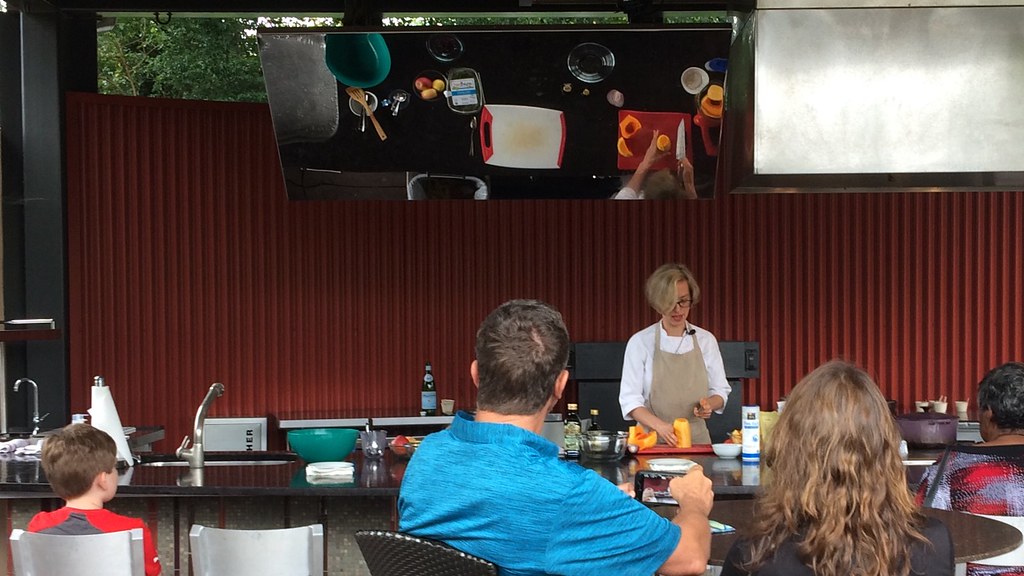
The Edible Outdoor Kitchen is clearly designed for visitor education.  The kitchen features an extensive island that includes a cooking range with plenty of counter space and a bar for visitors to get a close look at the demonstration.  There is a mirror above the island to allow all the class participants -- even the ones in the back row -- to get a good view of the chef at work. 
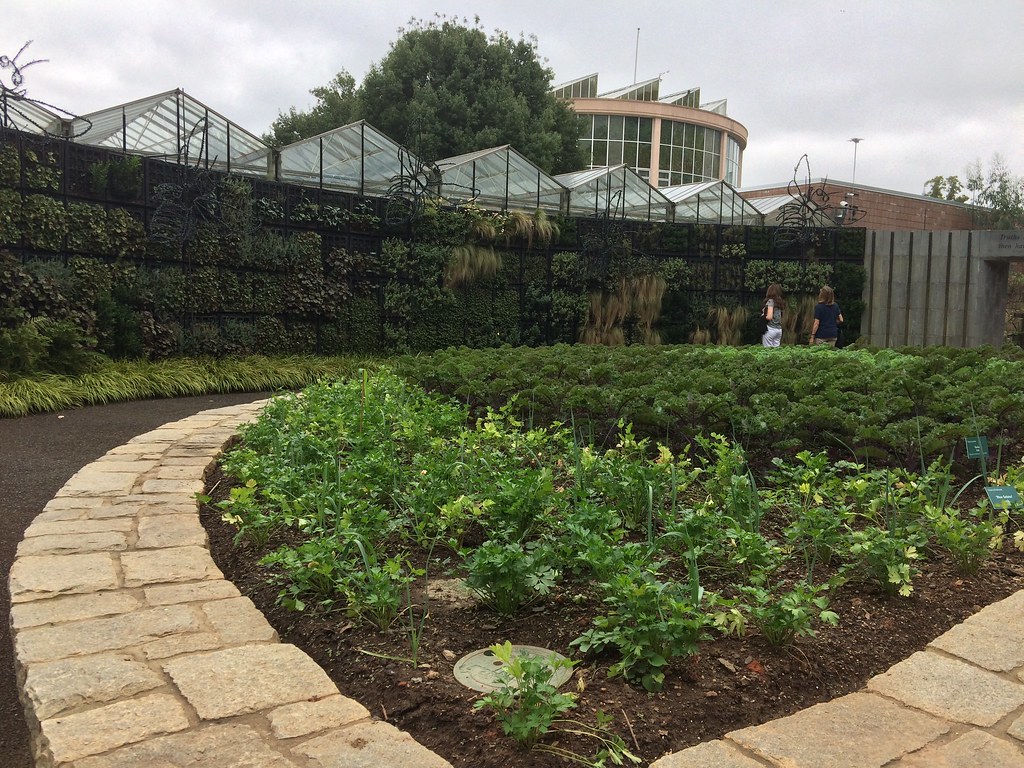
The Edible Garden at the Atlanta Botanical Garden
Visitors can observe the class from a bar next to the island, at several tables under a covered pavilion, or from benches in the back and to the side of the pavilion.  There's also plenty of standing room for folks to pause and listen for a few minutes on their stroll from the Edible Garden to the Fuqua Orchid Center.

The kitchen is located in the Atlanta Botanical Garden's Edible Garden.  The Edible Garden has impressive, large stonework raised beds that showcase plants at the visitor's eye level.  In the center of the first garden room is a water feature that, on past visits, has been used to grow rice.  The first backdrop to the garden are a variety of espalier fruit trees.  The second is an extensive living wall that has herbs and ornamental plants.  There are also formal in-ground plots and a berry patch.
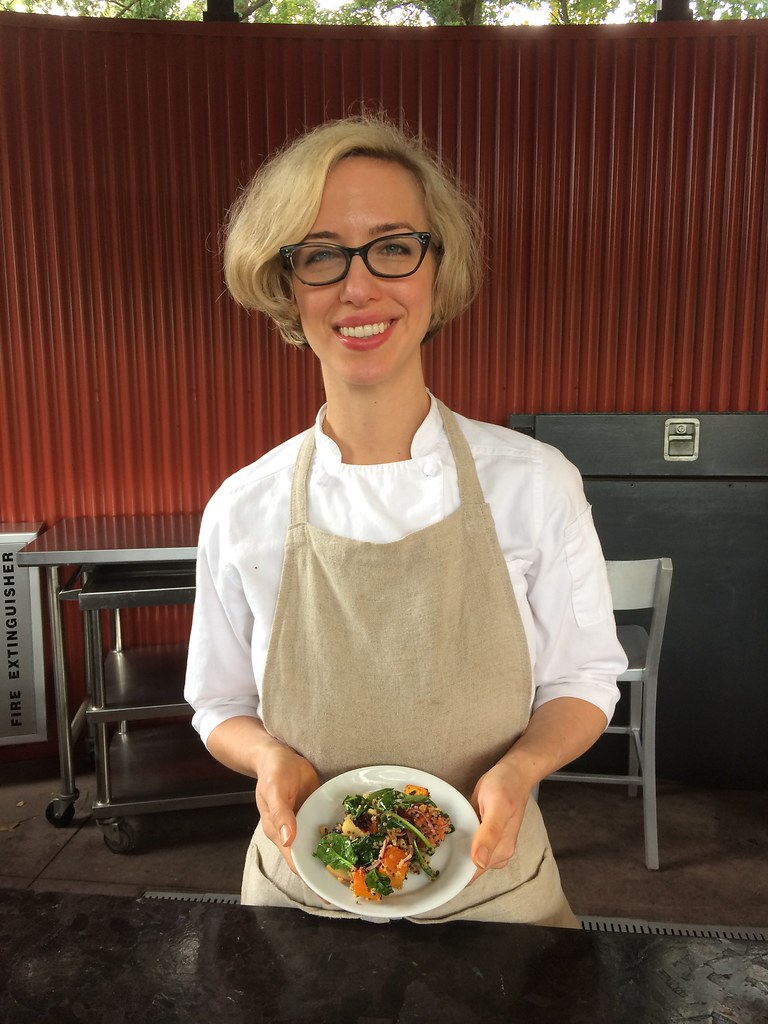
Chef Julia LeRoy is a garden chef
at the Atlanta Botanical Garden
The Atlanta Botanical Garden offers three Garden Chef Demo classes every weekend, free with admission.  The Garden Chefs are tasked with demonstrating a seasonal recipe made with local ingredients for visitors.  In the class I attended, Chef Julia LeRoy prepared a butternut squash salad with seasonal greens, quinoa, onions, apples, roasted walnuts, and dried cranberries.

Class participants didn't simply learn how to prepare the dish -- Chef LeRoy encouraged visitors to consider alternatives to the recipe by asking questions like, "What are some other Georgia apples that are good for baking?"

If I had seen the finished product before attending the class, I might have thought to myself that it was too complicated for me to attempt.  But after Chef LeRoy walked us through the steps, it didn't seem so tricky.  She also gave some tips for alternatives that might be a little easier, like substituting rice for the quinoa or by purchasing roasted walnuts rather than roasting at home. 

The chef also discussed some of her philosophy on cuisine.  "I like to make healthy meals without putting too much thought into it.  I don't need to see the nutritional breakdown," she said, "I just want to enjoy it."  And that kind of gets to the heart of the Garden Chef Demo program.  The Atlanta Botanical Gardens offers these classes to help visitors make the connection that fruits and vegetables can be prepared simply to create delicious, healthy meals.
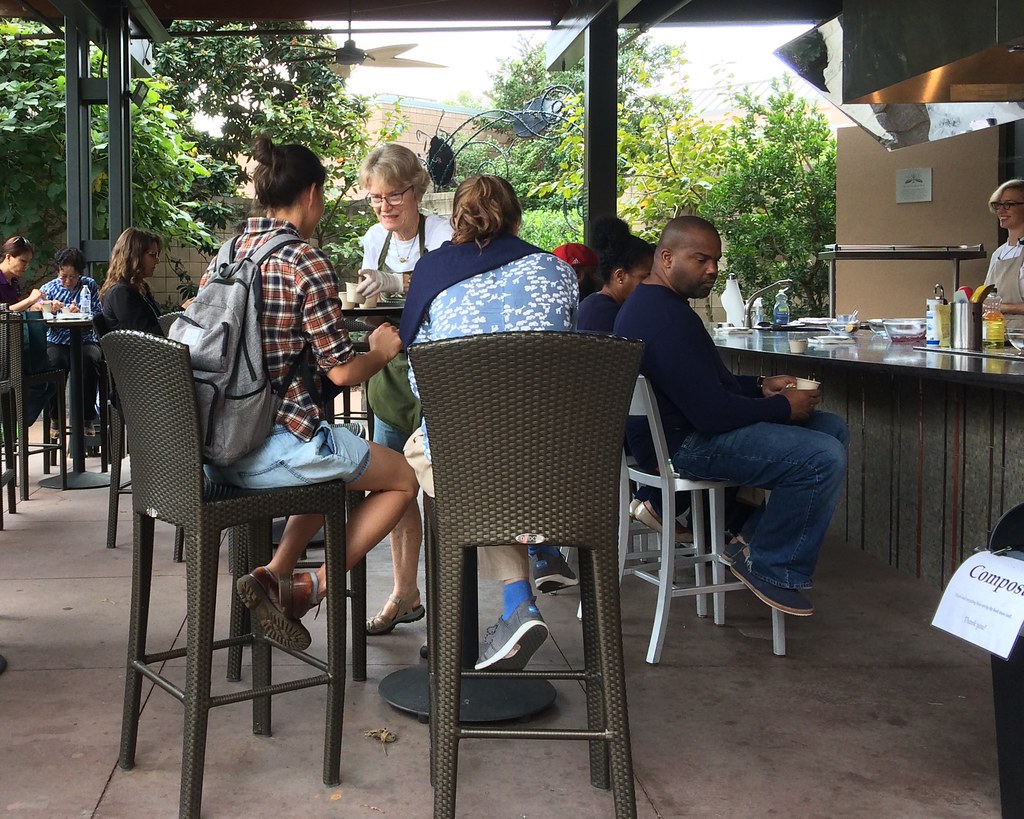
Outdoor Kitchen Assistant gives the class samples
I would imagine that these classes wouldn't be possible without a lot of help.  Two fantastic volunteers were on hand to help set up, greet visitors, assist the chef, serve class participants, and clean up after the class.  These outdoor kitchen assistants did a great job keeping things running smoothly.

In conclusion, if you happen to visit the Atlanta Botanical Garden on a weekend, consider setting aside roughly half an hour.to check out one of these classes.  I've visited a few times where I've been on kind of a tight schedule, and I always kicked myself afterwards for not allowing time to sit in on the class.  The Edible Outdoor Classroom is located at fair distance from the Hardin Visitor Center, Longleaf Restaurant, and other seating areas (besides garden benches), which makes it a good spot for visitors to take a break from exploring the gardens. 

If you only have time to pause for a moment rather than attend a full class, never fear.  The Atlanta Botanical Garden does post all of the class recipes online, so don't stress too much about missing out.  In addition to the recipes from the most recent classes, the website also seems to have the recipe for every dish that has been prepared in the Garden Chef Demos since 2010.  What a great resource!

Other important considerations when planning your trip:
  • Garden Chef Demos:
    • May - October, 12 p.m., 1 p.m. and 2 p.m. Saturdays and Sundays
  • Hours of operation:
    • April - October, 9 a.m. to 7 p.m. Tuesday through Sunday
    • November - March, 9 a.m. to 5 p.m. Tuesday through Sunday
    • Closed Mondays, Thanksgiving, Christmas, and New Years day
    Class participants get to sample the dish prepared
  • *Admission:
    • Adults: $21.95
    • Youth (3-12): $15.95
    • Members and children under 3: Free
  • Parking:
    • 0 - 30 minutes: Free
    • 31 - 60 minutes: $2
    • Additional 30 minutes: $1
    • Daily Maximum: $15
  • Accessibility:
    • Virtually the entire garden is accessible.  I did not note any areas that could not be reached by one way or another.
    • Wheelchairs available at the Visitors Center on a first come first serve basis.
    • Electric mobility scooters may be rented.
  • Pets:
    • Restricted to service animals only.
    • Dogs are allowed for the annual "Reindog Parade" event.
  • Atlanta Botanic's guide to Garden Etiquette is available for review.
*Are you a member of your local public garden?  Ask if membership includes participation in the American Horticulture Society's Reciprocal Admissions Program.  By supporting your local garden, you and one guest could visit the Atlanta Botanical Garden for free.

To see more photos of any of my visits to the Atlanta Botanic Garden, check out my flickr stream.
If you have any questions, ideas, or suggestions, leave a comment or shoot me an email.

 Does your local public garden or garden club offer culinary classes?  What are they like?

When is the last time you attended a cooking class?  What dish did you prepare? 


Wednesday, December 4, 2013

Community Gardening: Is it for you?

Beardsley's mission is to increase access to fresh produce
through education, product donations and outreach.
I am a college student who lives on a very tight budget, in a cramped apartment completely surrounded by shade.  After struggling to grow food on the patio, inside, and in a friend's yard, I decided to get a plot at a nearby community garden.  Now that the allocated growing season set forth by the garden has wrapped up, I'd like to share a little about my experience.

About the Community Garden

Beardsley Community Farm is a part of the city of Knoxville's Malcolm Martin Park.  Their mission is to increase access to fresh produce through education, product donations and outreach.  Although the farm is located just down the road from a Food City grocery store, many of the folks who live in the low income housing surrounding the property struggle with access to fresh fruits and vegetables. 

In addition to community garden plots, the Beardsley property
includes a berry patch, orchard, and a fenced in demonstration
garden complete with a greenhouse, chickens, worm
composting and massive rain barrels.
Beardsley is officially a 501-C4 government run non-profit.  Although the city mows areas of the property and funds some of the farm's operating costs, much of the work is done through the Community Action Coalition (CAC) AmeriCorps.  In a given year, the Americorp may contribute 3 to 5 staff members whose sole job is keep up the farm's operations.

In addition to community plots, the property includes a berry patch, orchard, and a fenced-in demonstration garden complete with a greenhouse, chickens, worm composting, and massive rain barrels.  The food produced in the demonstration areas is donated to organizations such as Knoxville Area Rescue Ministries, Family Crisis, and Bridge Refugees.  Gleaning beds are located just outside the community garden area.  The idea is that hungry folks will take food from the gleaning beds instead of the community garden plots.

In a given year, Beardsley will host about
1000 volunteers, like this group of UT students.
Not only does Beardsley offer space to grow food and providing produce donations to those in needs, but they also offer many educational opportunities to the community throughout the year.  These include hosting youth programs, reaching out to local churches, schools, and colleges, and their "Skillshare" events where local experts teach workshops about sustainable gardening practices.

In a given year, Beardsley will host around 1000 volunteers.   About one tenth of the volunteers come from the local community.  The rest come from local community colleges, universities, and work groups like Comcast and Scripps.  For this reason, Beardsley is not what I'd consider a "true" community garden that was founded by and for the community.  Even though the farm may never be completely community run, it isn't hard to argue that they do a great deal of good for their neighbors.

The plot thickens

I adopted a plot that had been
abandoned in the heat of summer.


Although I would have liked to get started gardening earlier in the spring, I didn't want to take away an opportunity for someone from nearby low-income housing to have a garden plot.  That's why I waited until August to take over one of the plots that had been abandoned earlier in the season.  Clearing out my bed took about four hours altogether, but it was easy work for a garden nut fueled by visions of freshly grown fruits and vegetables.

I left the previous owner's marigolds and two of the their tomato plants in case they came back for some food.  Although I later learned that they'd moved out of town, somebody had been enjoying the tomatoes.  Every time I came by to weed and water, there were only green tomatoes on the plants.

It was a bit late in the summer to grow warm season vegetables, so I spent most of August preparing the bed for my cool season vegetables.  I decided to make eight raised rows for my fall garden.  The water would easily drain from the raised rows.  Although this meant a bit more time watering in September, I hoped it create a warmer soil temperature and hopefully more productive crops later in the season.

Buckwheat provided some cool shade for the seedlings
until the temperatures were consistently in the 60's

I planted buckwheat between each row to provide partial shade and some respite from heat for my seedlings early in the season.  When the temperatures dropped down to the 60's during the day, I pulled up the buckwheat, and let it decompose in the trenches between the raised rows.  Then I covered with fall leaves, which also began to break down.  This increased the amount of organic matter and attracted worms, which carried some organic matter into their tunnels around the roots of my crops, increased drainage and aerated the soil.

I chose to direct sow instead of using store-bought transplants.  In September, I made a small trench along the top of each row.  I filled each trench with lettuce, spinach, turnip or broccoli seeds, then covered with some of the vermicompost from the system I keep on the patio of my apartment.  I set aside two rows for each plant, and planted one row of each crop two weeks apart to extend my growing season.  I had more greens than I knew what to do with from mid-September until the end of November.  Snow peas and nasturtiums were planted around the old tomato cages and marigolds.

Fall leaves between each row added organic matter
as they decomposed and attracted worms.
There were some problems with people picking my vegetables.  I don't think I ever had a tomato (although I didn't plant them and they weren't really any trouble to maintain), and in the middle of the fall season somebody did pick about half of my turnips.  The way I see it, the folks that picked the food probably needed it more than I did, and even after all of that I still had more than I knew what to do with.

Community Gardening: Is it for you?

Although I only worked in a community garden for a brief time, I've fallen in love with the experience.  Yes, sometimes other people picked my vegetables, but I always had plenty to feed myself.  Beyond just being able to provide fresh produce for myself that I probably wouldn't have been able to get on my limited budget, I also enjoyed the sense of community I felt when I worked in the garden.  I got to know some of the folks who live nearby that walk the track in the park, and catch up about the weather and what's going on in the garden.  I also learned a few new tricks from folks who worked in neighboring plots.

When deciding whether or not to join a community garden, I think that it would be a good idea to ask yourself the following questions: 
  1. Do you lack space to successfully grow a vegetable garden at home? 
  2. Are you looking for ways to add fresh fruits and vegetables to your diet?
  3. Do you have at least an hour a week to spend maintaining your plot?  
  4. Would you like to feel more connected to what's going on in the environment and your community?
  5. Would you be able to keep your cool if somebody shared in your harvest without asking?
If you were able to say yes most or all of these questions, then joining a community garden might be right for you.

To see more photos of my plot at Beardsley community farms, check out my flickr set.
   
If you have any questions, ideas, or suggestions, please feel welcome to leave a comment on this post or shoot me an email.
   
Folks who have community gardened before, what was your favorite part about the experience?  What was your least favorite part about community gardening?  Any advice for people who are considering joining a community garden?

There had been snow the morning before Thanksgiving when I cleared out my bed.  Community gardeners are encouraged to harvest their cool season vegetables by the 28th of November.